Commercial Roofing Repair: The Building Owner's Guide for Houston, Baytown, and East Texas
August 2026 · Sure Claim Roofing LLC
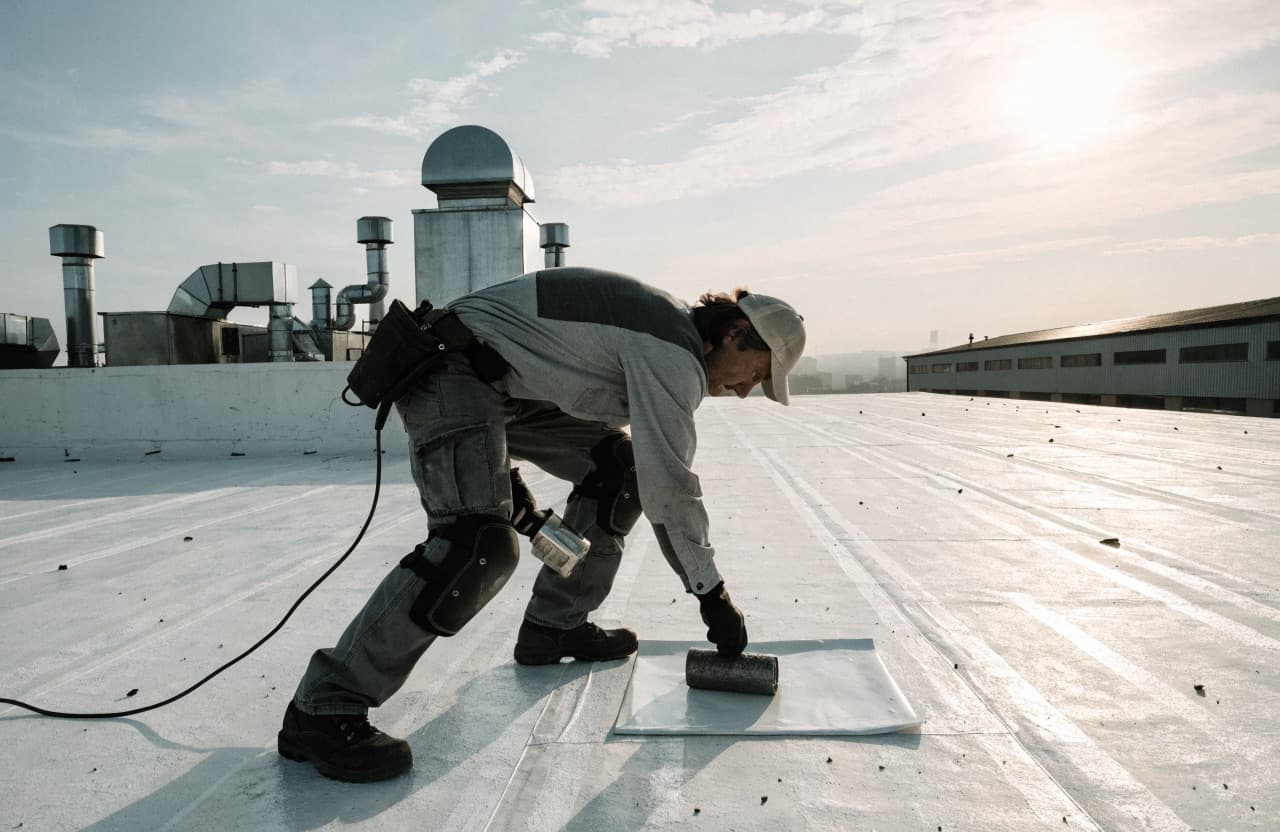
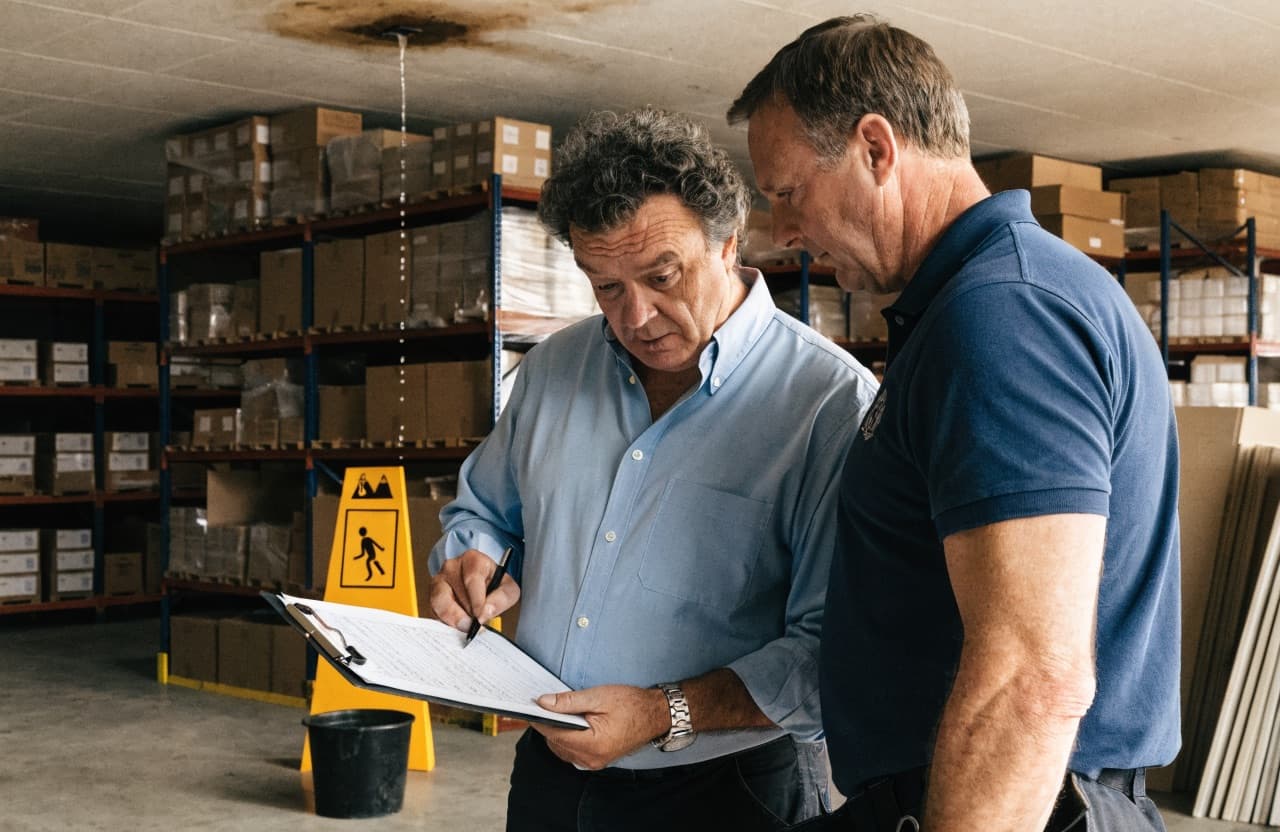
A leaking roof on your home is a problem. A leaking roof on your building is a different animal entirely: it drips onto inventory, shorts out equipment, closes off work areas, creates slip hazards and liability, and does all of it during business hours while customers watch. Commercial roofing repair is not residential repair scaled up. It is a different trade, with different materials, different failure points, and a different definition of urgency.
This guide covers what actually goes wrong on commercial roofs in our corner of Texas, how the repairs work on each roof system, when repair stops making sense, and how to handle storm damage and insurance on a commercial property. Sure Claim Roofing repairs commercial roofs across Harris County and Chambers County, from the Houston Ship Channel industrial corridor to the warehouses and retail centers of Baytown, Pasadena, and Mont Belvieu. If water is coming in right now, skip the reading and call (281) 691-0552.
Commercial Roof Repair Is a Different Job Than Residential
Most commercial buildings in East Texas carry flat or low-slope roofs: single-ply membranes like TPO or EPDM, modified bitumen, built-up roofing, or standing seam metal. These systems do not shed water the way a pitched shingle roof does. They manage it, holding it, draining it through internal drains and scuppers, and sealing around every one of the dozens of penetrations a commercial roof carries: HVAC curbs, vent stacks, gas lines, conduit, skylights.
That changes everything about repair. A shingle roofer's instincts fail on a flat roof, and the most expensive commercial repairs we see are ones where somebody patched a membrane with the wrong material, smeared mastic over a failed seam, or screwed a residential fix onto a commercial system. It holds until the next hard rain, and by then water has been traveling under the membrane for weeks, soaking insulation you cannot see.
The second difference is disruption. Your roof sits over payroll, inventory, and open-for-business hours. Commercial repair has to be planned around your operation, sectioned, scheduled, and cleaned up so your business keeps running while the work happens overhead.
The Six Commercial Roof Problems We Repair Most
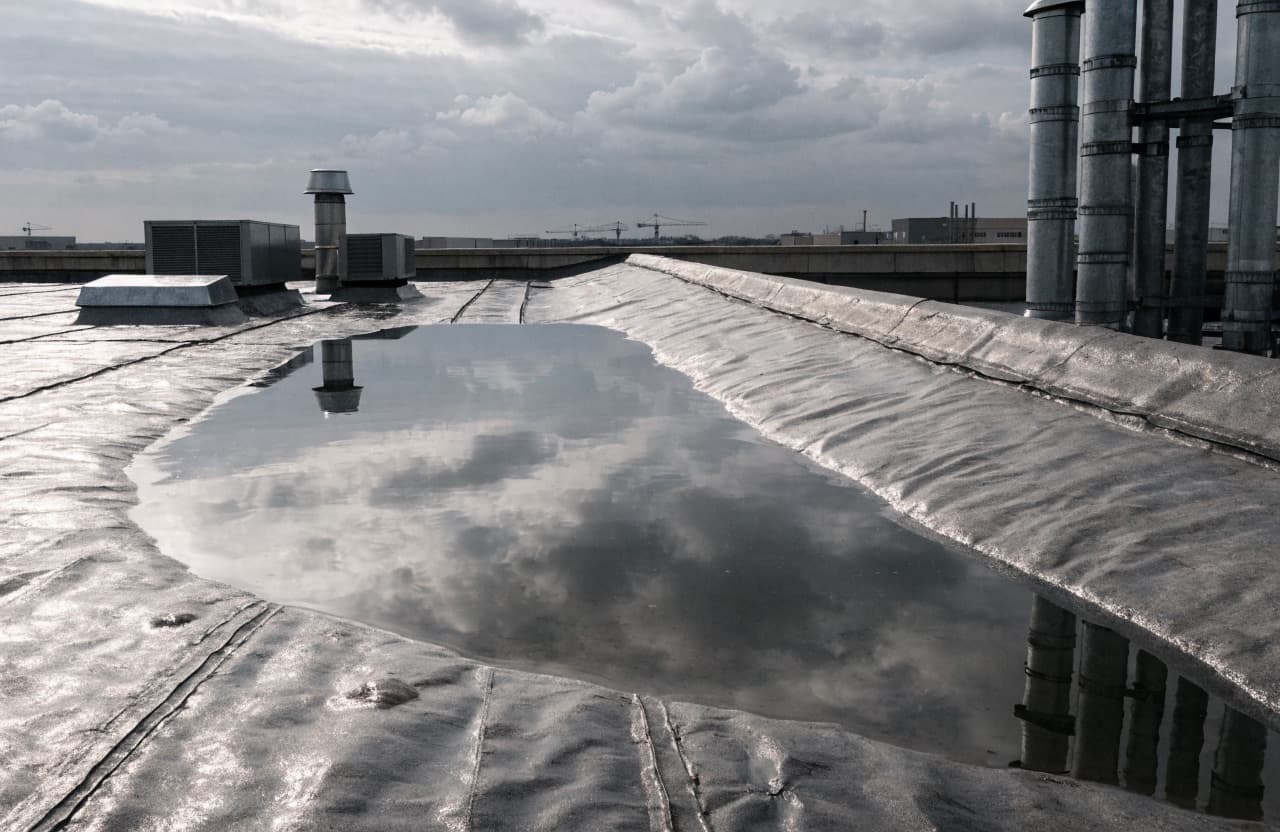
•Ponding water. Water still standing 48 hours after rain is the number one flat-roof killer in the Gulf Coast climate. It degrades the membrane under it, multiplies UV damage, adds structural load, and finds every weak seam. Fixes range from drainage corrections and tapered insulation to targeted membrane replacement.
•Seam failures and membrane punctures. TPO and EPDM roofs fail at their seams before they fail in the field. Heat-welded seams let go with age and thermal cycling; punctures come from dropped tools, hail, and foot traffic around HVAC units. Both repair cleanly with properly welded patches when caught early.
•Flashing failures at penetrations. The single most common leak source on any commercial roof: the sealed transitions around HVAC curbs, pipes, and roof edges. Flashing moves, cracks, and separates with building movement and heat. Small repair, big consequences when ignored.
•Clogged drains and scuppers. A flat roof's drainage is its lifeline, and one season of leaves, tenant debris, and windblown trash can block it. We clear and screen drains as part of every repair visit, because a repaired membrane under six inches of trapped rainwater is not repaired for long.
•Blistering and alligatoring. On modified bitumen and built-up roofs, trapped moisture and decades of Texas sun cause bubbling and surface cracking that reads like dried mud. Localized blisters can be cut out and repaired; widespread alligatoring is the roof telling you its clock is running out.
•Storm damage. Hail bruises and punctures membranes, wind lifts edge metal and peels seams, and windborne debris does the rest. After every significant Harris County or Chambers County storm event, we inspect and document commercial roofs the way insurance adjusters need to see them.
The Roof Systems We Repair, and How
TPO (thermoplastic polyolefin). The white reflective membrane on most newer commercial buildings here. Repairs are made by heat-welding new TPO material over cleaned, prepared damage, a true molecular bond, not glue. Done right, a welded TPO patch is as strong as the original field membrane.
EPDM (rubber membrane). Repaired with primed self-adhering patches and seam tape. The failure mode is usually shrinkage pulling at seams and flashings on older roofs.
Modified bitumen and built-up roofing. The multi-layer asphalt systems on many older Baytown and Pasadena buildings. Repairs involve cutting out saturated sections, torching or cold-applying new plies, and restoring the surfacing.
Standing seam metal. Repairs center on fastener back-out, panel seam separation, flashing, and sealant renewal. Done properly, metal systems are the longest-lived roofs on the Gulf Coast, which is why we also install them.
If you are not sure what system is on your building, that is fine. That is what the free inspection is for.
Repair or Replace? How We Make the Call Honestly
Nobody wants to hear "full replacement" when a repair would do, and the reverse is just as expensive: paying for repair after repair on a roof that is finished. Our rule of thumb is simple math and a moisture check:
•If damage is localized, the membrane has serviceable life left, and the insulation below is dry, we repair. Most calls we run end here.
•If more than about a quarter of the roof is compromised, if moisture readings show saturated insulation spreading under the membrane, or if you are calling us for the third time in two years for the same roof, repair money is being poured into a system that is done. We will show you the readings and the photos, and lay out both numbers side by side.
You get the evidence either way. We are a repair-first company, and our reviews reflect that, because a building owner who trusts the small call gives us the big one when it actually comes.
Emergency Commercial Roof Repair: When Water Is Coming In Now
An active commercial leak is an inventory and liability event, not just a roofing event. Move what can be moved, cone off the slip zone, catch what you can, and photograph everything, including the water path, damaged stock, and affected equipment, because that documentation matters for your insurance claim.
Then call us at (281) 691-0552. Our emergency roof repair crews respond across Harris and Chambers County seven days a week: we locate the entry point (which on a flat roof is almost never directly above the drip), stop the water with proper temporary measures, and schedule the permanent repair around your operating hours, early mornings, weekends, or sectioned so your doors stay open.
Storm Damage and Commercial Insurance Claims
Commercial roofs take the same Gulf Coast hail and wind that houses do, with higher stakes and more complicated policies. Commercial property deductibles often run as a percentage of building value, wind and hail may carry separate terms, and documentation standards are stricter than on a homeowner claim.
The process, though, follows the same discipline we teach homeowners: document before touching anything, get a professional inspection before you file, meet the adjuster with your contractor on the roof, and review the scope line by line before accepting it. Our roofing insurance claim assistance guide walks through that process step by step, and nearly all of it applies to commercial claims. We inspect, document, and meet adjusters on commercial buildings across the area, and we have been doing it since 2019.
Commercial Roof Repair Near Me: The Areas We Serve
When you search for commercial roof repair near me from a warehouse office in east Harris County or a shop in Chambers County, "near" matters more than it does for most trades: response time decides how much water gets in, and local crews know how these specific buildings, built in this climate, on this coast, actually fail.
We are based in Baytown and repair commercial roofs throughout Harris County and Chambers County, including Houston and the east metro industrial corridor, Baytown, Pasadena, Deer Park, Highlands, Crosby, Huffman, Mont Belvieu, Beach City, and Dayton. Warehouses, retail centers, offices, churches, shops, and industrial facilities, if it has a low-slope roof and it is within an hour of the Ship Channel, we work on it.
What Commercial Roofing Repair Costs
Every honest answer starts with "it depends," but here is what it actually depends on: the roof system (TPO patches price differently than built-up tear-and-replace), the size of the affected area, how much insulation below it is wet, roof access and height, the number of penetrations involved, and whether code requires upgrades when the work is done. Small membrane and flashing repairs are far less expensive than most owners fear, which is exactly why deferring them, and letting saturated insulation spread, is the costliest habit in commercial building ownership.
We quote from a free on-roof inspection with photos and moisture readings, so the number you get is built on evidence you can see, not a guess from the parking lot. If storm damage is involved, insurance may carry most of the cost, and we handle that documentation.
A Maintenance Program Beats Every Repair
The cheapest commercial roof repair is the one a semiannual inspection made unnecessary. Twice a year, and after every major storm, a commercial roof should get its drains cleared, seams checked, flashings inspected, and small damage patched while it is still small. Building owners who do this get decades from their roofs. Building owners who wait for the ceiling stain pay for saturated insulation, interior damage, and emergency rates instead.
We run exactly this kind of recurring inspection for commercial properties across the area, and the first one is free.
Commercial Roofing Repair FAQs
How fast can you get to my building? We operate seven days a week out of Baytown and cover all of Harris and Chambers County. Active-leak calls get priority scheduling, and most inspections happen within days, not weeks.
Can you repair just one section of a TPO roof? Yes. Heat-welded TPO patches restore full strength to a localized area, and sectional membrane replacement handles larger damage without a full re-roof, provided the insulation underneath is dry. That is what the moisture check confirms.
Will my business have to close during the repair? Almost never. We section the work, schedule around your hours, and keep interior disruption to the affected area. Tell us your constraints and we plan the job around them.
Does insurance cover commercial roof repair? Wear and deferred maintenance, no. Sudden storm damage from hail or wind, usually yes, subject to your policy's wind/hail deductible. The documentation makes or breaks these claims, so start with our free inspection and read the claim assistance guide before you call your carrier.
Do you take small repairs, or only large commercial jobs? Both. A flashing repair on a strip-center unit and a full warehouse membrane project get the same crew quality. Small repairs done right are how we earn the large ones.
What if my roof is past repairing? Then we say so, with the moisture readings and photos that prove it, and quote a replacement system built for this climate, TPO or standing seam metal, with financing available and insurance handled if a storm event is the cause.
If your building's roof is leaking, ponding, or overdue for eyes on it, get ahead of it today. Book a free commercial roof inspection or call (281) 691-0552. We will tell you exactly what is up there, what it needs, and what it does not, in writing, before you spend a dollar.
Written by James
Owner, Sure Claim Roofing LLC
James has helped hundreds of East Texas homeowners navigate storm damage repairs and insurance claims since 2019. Licensed and fully insured in Texas.
Need a Free Roof Inspection?
Book Your Free InspectionSee What Your Roof Should Cost in About a Minute
Type your address, and we measure your roof from satellite imagery and show you a real price range. Know your number before you talk to your insurance company.
Free. No obligation. Your price appears instantly online.
See your roof price in 60 seconds
Type your address. We measure your roof from satellite imagery and show you a real price range. Free, and no salesman visit required.
Prefer to talk to a person? Book a free inspection