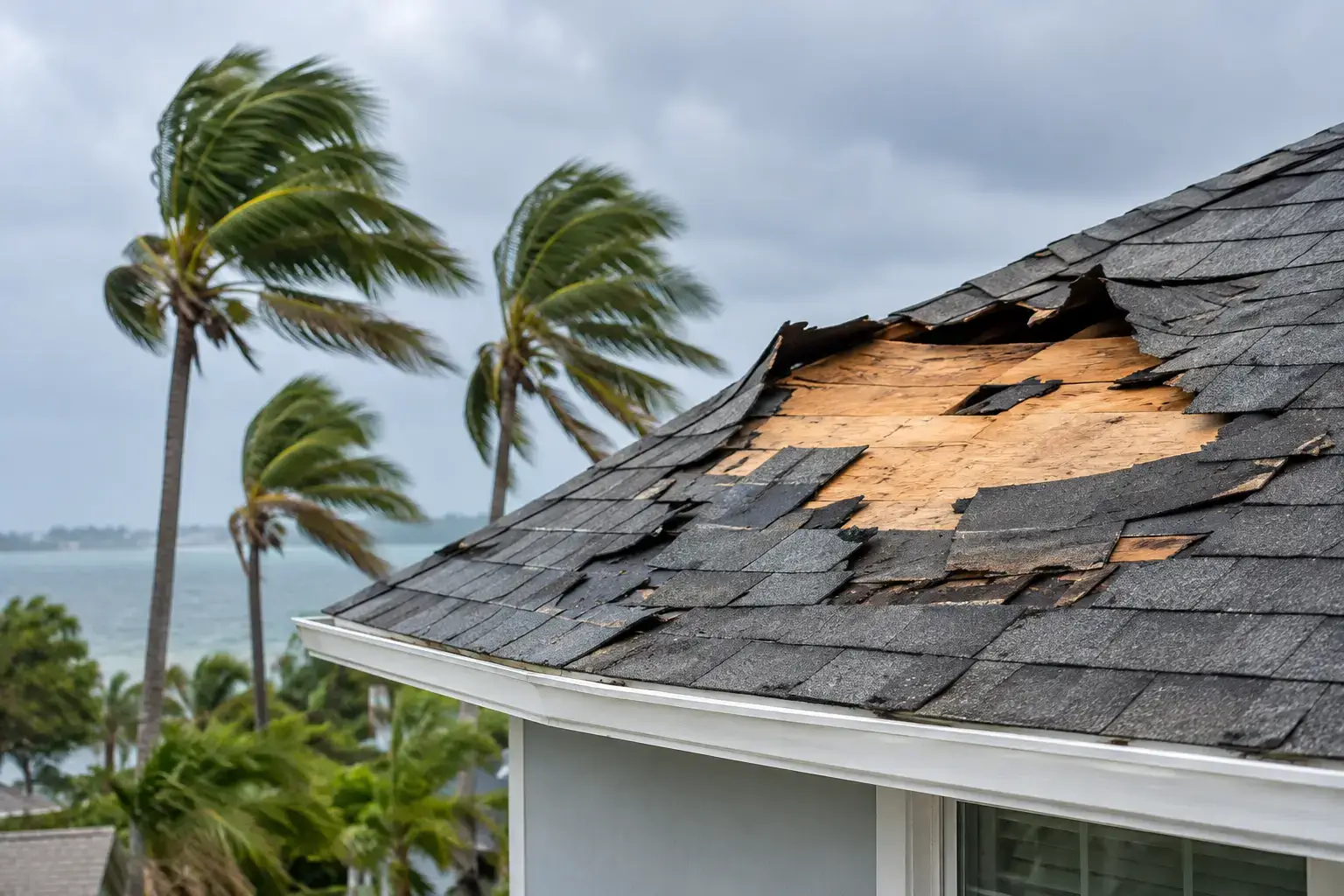
A hurricane can leave a roof looking mostly intact from the driveway while water is already finding a path beneath lifted shingles, loose flashing, or damaged roof vents. That is what makes hurricane roof damage difficult for Baytown-area property owners: the visible mess is not always the full story, and waiting for a stain to appear indoors can turn a manageable repair into damaged decking, insulation, ceilings, or inventory.
The first goal after the storm is not to make a quick repair decision. It is to protect people, prevent additional water entry where possible, and establish what actually happened to the roofing system. A documented, on-roof evaluation gives you a better basis for deciding whether you need a targeted repair, a full replacement, or further insurance review.
Start With Safety and Temporary Protection
Do not climb onto a roof after a hurricane. Wet surfaces, wind-thrown debris, loose materials, and hidden structural damage make a roof especially dangerous after a storm. Stay clear of downed power lines, unstable trees, and any sagging portions of the roof or ceiling.
From the ground, look for obvious changes: missing shingles, displaced metal panels, exposed underlayment, bent gutters, fallen limbs, or debris lodged around roof drains. Inside, check attic spaces and upper floors for wet insulation, active drips, water staining, or a musty smell. Take clear photos and note the date, but do not pull up shingles or make permanent changes before the roof has been assessed.
If water is entering the building, move furniture, electronics, stored materials, and merchandise away from the affected area. A tarp or other emergency covering may be appropriate when there is an exposed opening, but it needs to be secured carefully. Improper fastening can create additional holes or tear away more material in the next round of wind.
Hurricane Roof Damage Is Not Always Obvious
Wind damage is often more subtle than a roof with bare sections of decking. On asphalt shingle roofs, high winds can break the seal between shingles, lift tabs, crease the shingle mat, or pull fasteners loose. A lifted shingle may settle back into place afterward, leaving damage that is easy to miss from the ground but more likely to leak during the next hard rain.
Metal and tile roofs have their own failure points. Metal panels can loosen at seams or fasteners, while flashing at ridges, walls, and penetrations may pull away. Tile may crack, shift, or lose its underlayment protection without leaving widespread visible debris. On TPO and other low-slope commercial systems, wind can affect membrane seams, edge metal, flashing, drain areas, and rooftop equipment connections.
Wind-driven rain adds another layer of concern. A roof may not have lost any material, yet water can be forced beneath damaged flashing, around pipe boots, through unsealed wall transitions, or into compromised vent openings. That is why an inspection should look beyond the main roof field.
The Areas That Need Close Review
A useful inspection evaluates the roof as a system, not just a collection of shingles or panels. That includes the roof covering, ridge and hip materials, valleys, flashing, pipe penetrations, vents, skylights, chimneys, gutters, drainage paths, and the condition of the decking where it can be evaluated.
Photos matter because they show the condition at the time of inspection. They also help property owners compare recommendations without relying on vague descriptions such as “storm damage” or “needs attention.” You should be able to see what the contractor found, understand where it is located, and know whether it is causing an active leak, a near-term maintenance issue, or a broader replacement concern.
Know What Must Be Established First
Not every hurricane-damaged roof needs the same response. The right scope depends on the location and extent of damage, the roof’s age and remaining service life, whether water has entered the structure, and whether matching materials are available.
| What you are seeing | What should be established first | Likely next step | | --- | --- | --- | | An active ceiling leak or visible opening | Where water is entering and whether temporary protection is needed | Emergency leak response followed by documented repair scope | | A few missing or lifted shingles | Whether damage is isolated and surrounding shingles remain serviceable | Targeted repair if materials and roof condition support it | | Repeated leaks, widespread wear, or multiple damaged slopes | Condition of the full system, decking, and flashings | Compare repair costs against replacement value | | A commercial roof with ponding water or membrane movement | Drainage performance, seams, edge details, and occupied-building risks | Commercial roof assessment and phased repair or replacement plan |
A repair is often the sensible choice when damage is contained, the surrounding roofing materials are in good condition, and the repair can restore a reliable water-shedding surface. Replacement may make more sense when wind damage is widespread, the roof is already near the end of its life, prior repairs are failing, or a pieced-together approach would leave too much uncertainty.
The lowest immediate price does not always represent the lowest total cost. For example, replacing a small section may be economical on a newer roof with available matching shingles. On an older roof with brittle materials and recurring leaks, repeated spot repairs can become more expensive than addressing the full system once.
Document Before You Begin a Claim
If you believe the storm caused damage, keep a simple record. Save date-stamped exterior and interior photos, notes about leaks, invoices for emergency mitigation, and any communication related to the event. If a tree or debris caused the damage, photograph it before removal when it is safe to do so.
An insurance claim should be based on documented conditions, not manufactured damage or broad assumptions. A qualified roofing inspection can provide photographs and a written scope that identifies affected components, recommended work, and the reason each item is included. That gives the homeowner or building manager something concrete to review before speaking with an adjuster or authorizing repairs.
Insurance policies, deductibles, exclusions, depreciation, and coverage decisions vary. A roofing contractor can explain observed conditions and help organize the roofing documentation, but the carrier determines coverage. Be cautious of anyone who promises claim approval, tells you not to read your policy, or pressures you to sign an open-ended agreement before you understand the proposed work.
When an adjuster inspection is scheduled, it can be helpful to have the roofing findings available and to make sure accessible damage areas are clearly identified. The goal is not confrontation. It is to ensure the roof condition, photos, and scope are accurately communicated.
Commercial Properties Need a Different Lens
For a warehouse, retail center, shop, or industrial facility, hurricane damage can affect more than the roof itself. Water entry may interrupt operations, damage tenant spaces, affect electrical systems, or create slip hazards. Access requirements, rooftop equipment, drainage design, and the need to keep the building occupied all shape the repair plan.
A commercial assessment should identify the membrane or metal system type, seam and flashing condition, drainage issues, interior leak locations, and any safety or scheduling constraints. A small opening at a curb or edge detail can send water a long distance before it shows inside, so the visible ceiling leak may not sit directly below the actual roof failure.
For larger facilities, a phased plan may be appropriate. That can include immediate leak stabilization, a prioritized repair scope, and a longer-term replacement recommendation tied to budget cycles and operational needs. Clear documentation helps property managers explain the decision to owners, tenants, and maintenance teams.
Choose a Contractor Who Shows the Evidence
After a hurricane, door-to-door offers and quick estimates can be tempting. The better question is whether the contractor is willing to inspect the roof, explain what was found, provide photos, and put the work in writing. You should know the materials proposed, the areas included, the expected repair method, and what is not included before you decide.
For East Texas property owners, local accountability matters after the crew leaves. Sure Claim Roofing approaches storm work with on-roof evaluations, photo-supported documentation, written scopes, and clear repair-versus-replacement options. The purpose is not to sell the largest project possible. It is to give you enough evidence to make a sound decision about a major property investment.
If your roof made it through the hurricane but you are unsure what the wind and rain left behind, do not wait for a larger leak to provide the answer. Tell a qualified local roofer what you are seeing, ask to review the inspection photos, and make the next decision with the condition of the roof in front of you.