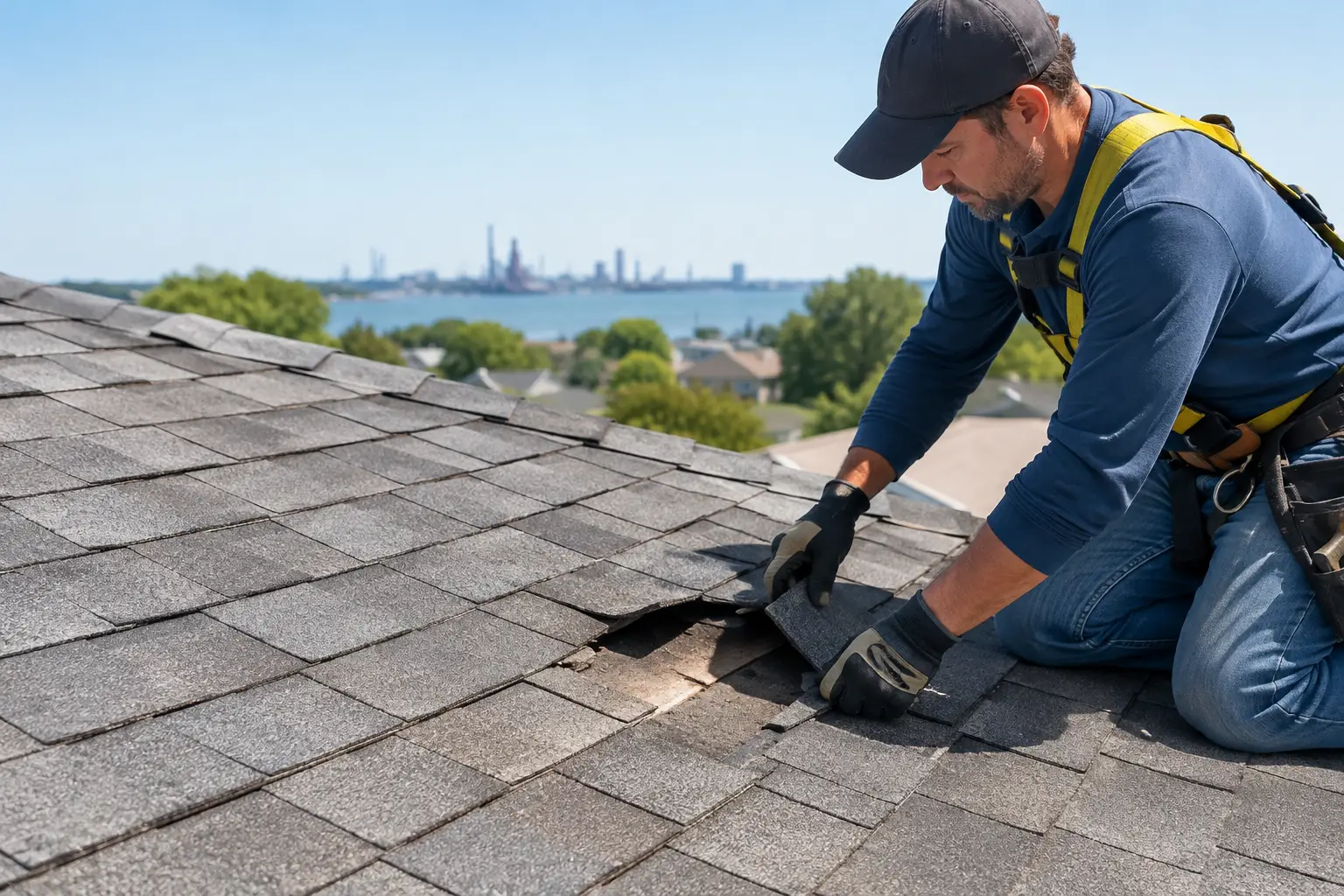
A few missing shingles can look like a small roof problem, especially from the driveway. But the missing shingles roof repair cost depends on more than the number of tabs or shingles you can see. In Baytown and across East Texas, wind can lift shingles without fully tearing them away, break the seal on surrounding shingles, expose nail heads, or allow water to reach the underlayment and decking. The visible gap is only the starting point.
A fair repair price begins with an on-roof evaluation, not a drive-by estimate. The goal is to establish what is missing, why it came loose, whether water has entered the roof system, and whether a targeted repair will blend into and protect the existing roof.
What Does Missing Shingles Roof Repair Cost?
For a straightforward, accessible repair involving a small number of standard asphalt shingles, homeowners may see a minimum-service price rather than a per-shingle price. Roofing crews still need to travel to the property, safely access the roof, identify compatible materials, remove damaged components, and reseal the repaired area. A small repair often falls in the several-hundred-dollar range.
Costs rise when the repair covers a larger area, the roof is steep or difficult to access, shingles are discontinued, or damage extends beyond the surface. If wind has damaged ridge caps, flashing, pipe boots, vents, underlayment, or decking, those items belong in the scope as well. A repair that starts with missing shingles can range from a modest localized fix to a more involved project costing several thousand dollars.
The important question is not simply, “What does one shingle cost?” It is, “What must be repaired so this section of roof sheds water correctly again?” Shingles work as a layered system. Replacing only the obvious missing pieces while leaving lifted neighbors, exposed fasteners, or damaged underlayment can create another leak after the next hard rain.
Why roofing estimates vary so much
Two homes can each have five missing shingles and receive very different proposals for legitimate reasons. Roof age matters because older shingles can become brittle during repair. A contractor may need to lift surrounding shingles to weave in replacements, and brittle material can crack rather than release cleanly.
Material availability also matters. An exact color match may not be available, particularly on an older roof. A close match can protect the roof but remain visible. In some storm-related cases, the availability and match issue may become relevant to an insurance claim, but that depends on the policy, documented damage, and insurer requirements.
Labor conditions matter too. A one-story home with a low-slope roof and clear access is different from a two-story home with a steep pitch, landscaping below, solar equipment, or a delicate tile surface near the repair. Responsible pricing accounts for the time, safety setup, materials, and workmanship required to complete the repair properly.
What an Inspection Should Establish Before Pricing
A trustworthy estimate should explain the condition behind the price. Before authorizing work, ask for photos and a written scope that identifies the affected roof components. You should be able to see what the contractor saw and understand whether the work is a repair, a temporary protective measure, or part of a replacement recommendation.
| What you are seeing | What needs to be established first | Likely next step | |---|---|---| | A few shingles missing after wind | Whether surrounding shingles are creased, lifted, or unsealed | Localized repair if the surrounding field is sound | | Water stain or active leak | Whether water is entering at shingles, flashing, a vent, or another penetration | Repair the actual entry point and inspect for hidden moisture damage | | Repeated leaks in the same area | Whether prior repairs addressed the source or only the symptom | Broader diagnostic repair, flashing correction, or replacement evaluation | | Missing shingles across multiple slopes | Overall roof age, wind damage pattern, and material condition | Documented repair-versus-replacement comparison |
The inspection should include shingles, ridge caps, valleys, flashing, pipe penetrations, vents, gutters or drainage where relevant, and roof decking if access reveals concerns. For commercial properties, the evaluation must also account for membrane seams, drains, curbs, rooftop equipment, and occupied-building conditions. A missing-shingle issue on a residential slope is not evaluated the same way as a leak on a TPO or metal commercial roof.
When a Repair Makes Sense
Repair is often the practical choice when damage is limited, the roof still has useful service life, and replacement shingles can be installed without creating more damage around the repair area. This can be especially true after a small wind event, a fallen limb, or isolated damage near a roof penetration.
A repair should be specific. The scope may include replacing missing and damaged shingles, resetting loose pieces, installing new underlayment where needed, replacing compromised flashing or pipe boots, and resealing the repaired section. It should also state how many areas or roof slopes are included rather than using vague language such as “repair roof as needed.”
Homeowners should be cautious about temporary fixes presented as permanent solutions. A tarp or emergency seal can limit water intrusion after a storm, but it does not replace a full assessment once conditions are safe. Likewise, applying sealant over a lifted shingle may offer short-term protection, but it may not resolve wind damage, broken adhesive strips, or damaged components underneath.
When Missing Shingles Point to a Bigger Decision
Missing shingles do not automatically mean a full replacement is necessary. However, replacement deserves consideration when the problem is widespread, the roof is near the end of its expected service life, shingles have become too brittle for reliable repairs, or multiple repairs are already visible across the roof.
The cost comparison should be honest. A lower repair price can be the right choice when it restores a sound system. But repeatedly paying for scattered repairs on an aging roof can cost more over time and still leave you with limited remaining roof life. A clear contractor will show you both options, explain the assumptions behind each, and let you review the proposed work before you decide.
Storm damage adds another layer. If missing shingles resulted from a covered wind event, take photos from the ground if it is safe, note the date of the storm, and avoid climbing onto the roof yourself. An inspection with photo documentation can help establish the condition of the roof and support a conversation with your insurance carrier. No contractor should manufacture damage or promise claim approval. The documentation should reflect what is actually present.
How to Compare Missing Shingles Repair Quotes
The lowest number is not always the lowest cost once incomplete work, temporary materials, or repeat visits are considered. Compare proposals line by line. Confirm whether each quote includes matching shingles or a close available match, underlayment, flashing work, disposal, permit requirements if applicable, and cleanup.
Also ask whether the contractor found a cause. Shingles can go missing because of wind, but poor fastening, ventilation problems, failed flashing, and previous installation errors can contribute. If the quote does not explain the cause or show the affected area, it is difficult to judge whether the repair will last.
For Baytown-area property owners, storm timing matters. A small opening can become more expensive when another rain system arrives before repair work is completed. If you see missing shingles, loose material flapping in the wind, ceiling staining, or dripping, tell the roofing contractor exactly what you are seeing and when it started. That information helps prioritize emergency protection and the right inspection path.
Sure Claim Roofing approaches these calls with on-roof evaluations, photos, and written scopes so owners can compare a focused repair with replacement only when the roof condition supports it. The purpose is not to turn every missing shingle into a replacement sale. It is to give you a documented basis for protecting the property.
If a shingle has come loose, the best next move is usually simple: have the area evaluated before the next weather event turns a visible repair into concealed water damage. A clear scope, real photos, and straightforward answers make the decision easier.