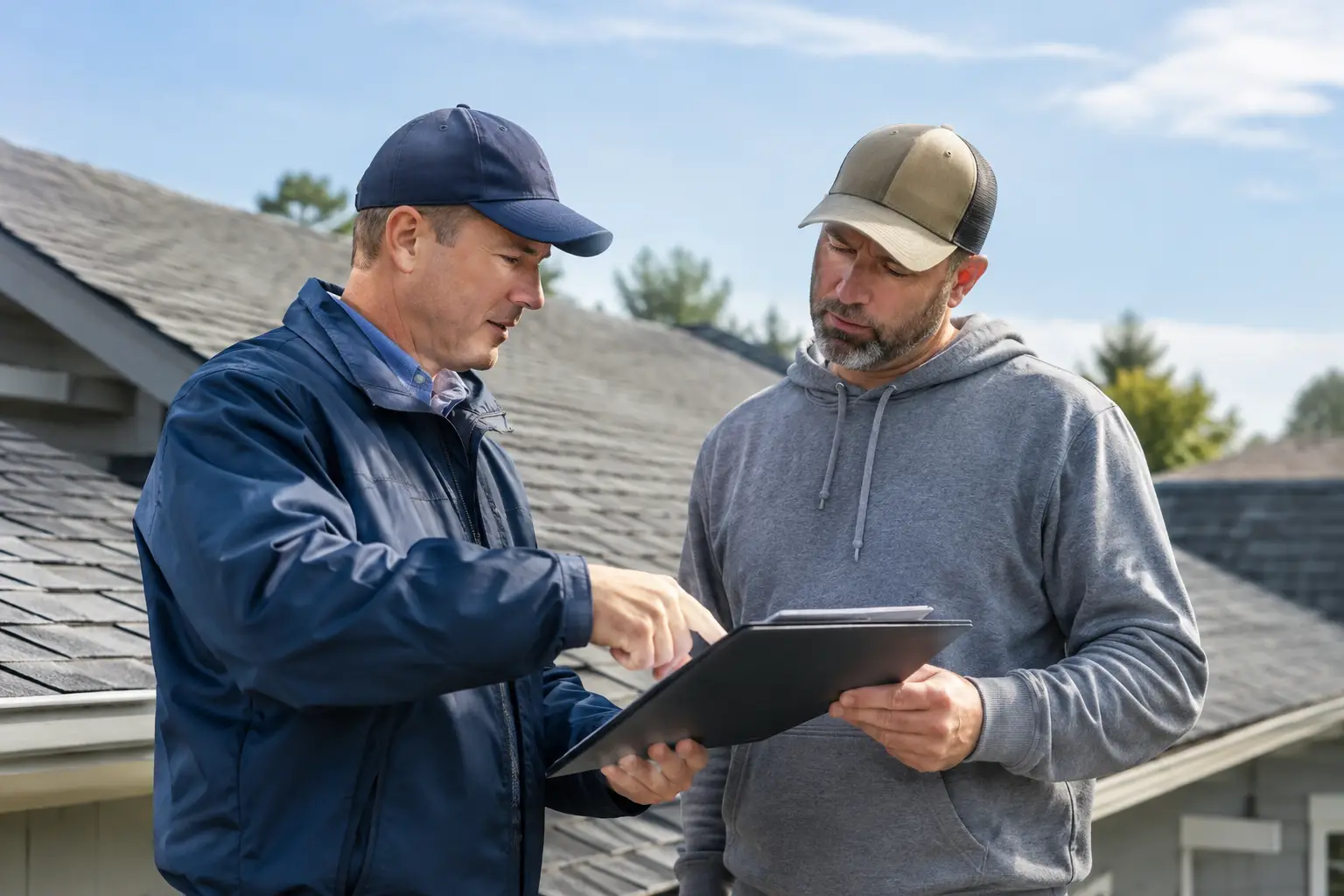
If you searched “roof adjuster meeting contractor” after a storm, you are probably trying to answer a practical question: should your roofer be there when the insurance adjuster inspects? In many cases, yes. A qualified local contractor can help identify roof components, document visible conditions, and make sure the discussion reflects what is actually on the property. The meeting should be about evidence, not pressure.
An adjuster’s inspection is one step in the claim process. It does not obligate you to hire a contractor, approve a replacement, or accept the first scope of work you receive. It gives the carrier information to evaluate the reported loss. Your job is to understand what was found, what was excluded, and what needs to happen next.
Why Have a Contractor at the Adjuster Meeting?
A roof system has more parts than the shingles visible from the street. Storm damage may involve ridge caps, starter shingles, flashing, pipe penetrations, vents, gutters, decking, underlayment, and drainage components. On a commercial roof, the inspection may also involve seams, coping, curbs, roof drains, membrane laps, and areas where water can pond.
An adjuster brings the carrier’s claim process and estimating guidelines to the inspection. A roofing contractor brings field knowledge of how the system is assembled and what it takes to restore it correctly. Those roles are different, and they can work together without turning the appointment into an argument.
A contractor’s presence can be especially helpful when damage is difficult to see from the ground, when a roof has multiple slopes or materials, or when prior repairs make the condition harder to interpret. The contractor can point out documented storm-related findings and explain why a specific repair method may or may not be workable.
That does not mean a contractor can tell the carrier what to pay. The insurer makes its own coverage and payment decisions. A responsible contractor should never promise claim approval, invent damage, or recommend “manufactured damage” to force a replacement. If the evidence supports a repair, that should be discussed plainly. If the roof has widespread storm damage or cannot be repaired without compromising the system, the documentation should show why.
What a Roof Adjuster Meeting Contractor Should Cover
The best meetings are organized before anyone climbs the roof. Your contractor should already have inspection photos, notes on observed conditions, and a clear understanding of where leaks or interior staining have appeared. This helps the meeting stay focused on the reported loss rather than vague opinions.
Here is what should be established during or shortly after the inspection:
| Property situation | What needs to be documented first | Why it matters | |---|---|---| | Active leak after a storm | Leak location, roof entry point, wet materials, temporary protection | The roof opening and interior damage may require separate documentation | | Missing or creased shingles | Quantity, location, slope exposure, damaged accessories | Isolated damage may be repairable, while widespread damage may affect the full slope | | Aging roof with storm concerns | Storm-related impact versus ordinary wear, brittleness, prior repairs | Age alone is not usually a storm claim, but it can affect repair options | | Repeated leak at flashing or a penetration | Flashing condition, sealant failure, surrounding materials, installation history | The cause could be storm damage, maintenance failure, or an installation issue | | Commercial flat or metal roof | Seams, fasteners, membrane condition, drainage, penetrations, affected areas | Repair scope must account for water movement, building operations, and system compatibility |
Photos should be specific. A close-up may show a crease, exposed mat, puncture, displaced shingle, or lifted flashing. A wider photo should establish where that condition sits on the roof. Interior photos, measurements, and notes about the date of the storm can also help connect the reported problem to the observed condition.
Before the Appointment: Prepare the Facts
Tell your contractor what you are seeing. Mention the first time you noticed the leak, which rooms are affected, whether water appears only during wind-driven rain, and whether any temporary repairs were made. If you have prior inspection reports, repair invoices, photographs, or a record of the storm date, keep them available.
For commercial properties, preparation also includes site access and operational concerns. The adjuster and contractor may need access to roof hatches, locked mechanical areas, tenant spaces, or a lift zone. A building manager should identify safety requirements, hours when work cannot interrupt operations, and any sensitive equipment under the affected roof area.
You do not need to become a roofing expert before the meeting. You do need to be available for questions and willing to review documentation. If you cannot attend, authorize a representative who can communicate clearly and receive the findings.
During the Inspection: Stay Focused on Condition, Not Sales
The adjuster meeting is not the time for a sales presentation. It is a fact-finding visit. A professional contractor should be able to identify damaged components, answer technical questions, and provide photos or measurements without talking over the adjuster or pushing you to sign a contract on the spot.
Ask your contractor to explain findings in plain language. If shingles are creased, ask where and how many. If flashing needs replacement, ask whether it was visibly damaged or must be removed to complete a proper repair. If matching materials may be an issue, ask what product is currently installed and whether local availability has been checked.
It is also reasonable to ask the adjuster what they are documenting and whether they need anything further. Keep in mind that an on-site conversation may not be the final claim decision. The adjuster may need to review photos, weather data, policy terms, depreciation, prior claims, or additional reports before a written estimate is issued.
Review the Insurance Scope Before Authorizing Work
When the carrier sends its estimate, compare it with the contractor’s written scope line by line. Do not focus only on the bottom number. Two proposals can appear far apart because they include different work.
Look at whether the scope addresses tear-off and disposal, underlayment, starter materials, ridge materials, flashing, ventilation, pipe boots, decking allowance, permits where required, and protection for landscaping or exterior surfaces. For a flat or commercial roof, confirm the membrane type, insulation work, edge metal, drains, penetrations, and details around rooftop equipment.
A difference between the insurance estimate and contractor estimate does not automatically mean either is wrong. Sometimes the carrier’s scope is based on limited visible information. Sometimes a contractor has included upgrades or unrelated work that is not covered. The right next step depends on the reason for the difference.
If the contractor finds legitimate damage or necessary construction items missing from the approved scope, they can provide supporting documentation for a supplement request. This is common when concealed conditions appear after tear-off, such as damaged decking or components that could not be evaluated until work began. A supplement should be supported by photos, measurements, and a clear explanation, not treated as an automatic add-on.
Your deductible remains your responsibility under the policy. Be cautious with anyone who suggests hiding it, waiving it through inflated paperwork, or changing invoices to make the numbers work. Clear paperwork protects you as much as it protects the contractor.
When a Meeting May Not Be Necessary
Not every roof issue requires a contractor-adjuster meeting. A small maintenance leak, a failed seal around a pipe, or normal wear on an older roof may be better handled as a straightforward repair. Filing a claim for a loss that falls below your deductible or is not storm-related may not be useful.
On the other hand, a meeting can be valuable when you have visible storm damage, multiple affected areas, a disputed inspection, an active leak after a documented weather event, or a complex commercial roof. It depends on the roof condition, the claim facts, and the amount of work needed to restore the property.
Sure Claim Roofing approaches these appointments with photo-supported findings and a written scope, so Baytown-area property owners can see the condition being discussed before deciding on repairs or replacement. The goal is not to create a claim. It is to document the roof honestly and help you compare the proposed work with what your property actually needs.
A good adjuster meeting leaves you with clearer questions and clearer evidence. Before authorizing any work, ask for the photos, read the scope, confirm what is covered, and make sure the repair or replacement plan makes sense for your roof, your budget, and the condition in front of you.