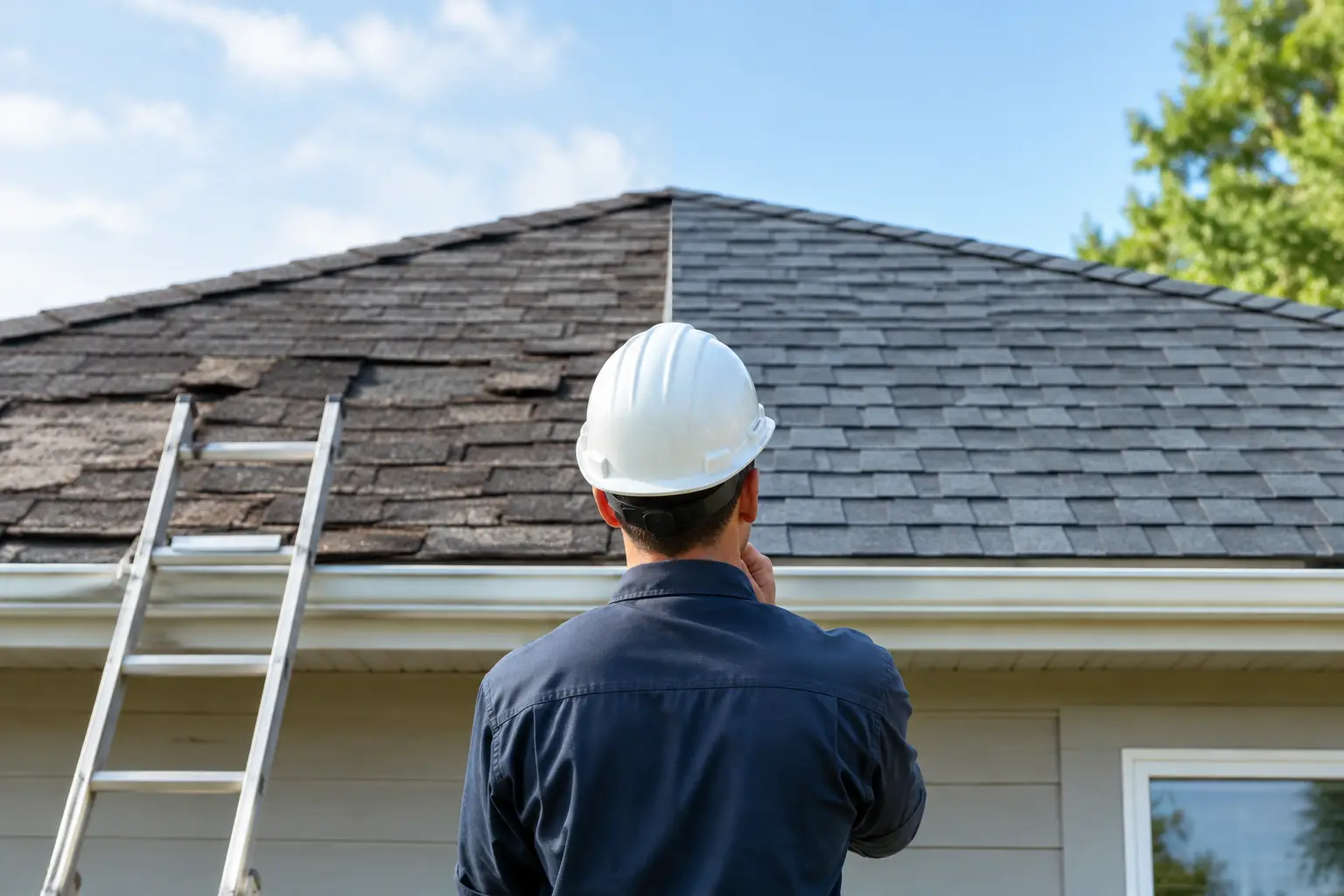
A ceiling stain after a Baytown thunderstorm can make every roof problem feel like a full replacement. Sometimes it is. Often, the right answer is a targeted repair that restores a failed flashing detail, replaces wind-damaged shingles, or corrects a leak around a pipe penetration. Roof repair versus replacement should not be decided from the driveway or by a sales pitch. It should start with what the roof is actually showing on top, underneath, and around the areas where water enters.
A useful decision protects the building without paying for work the roof does not need. It also avoids spending money on repeated repairs when the roofing system has reached the end of its reliable service life. The difference comes down to documented condition, not just the size of a visible leak.
Roof Repair Versus Replacement Starts With Evidence
A roof is a system. Shingles or metal panels are only part of it. Flashing at walls and chimneys, seals around vents and pipes, valleys, ridge caps, underlayment, decking, gutters, and drainage all affect whether water stays out.
That is why an on-roof inspection matters. A proper evaluation looks for the source of active leaks, but it also checks the condition of the surrounding roof. Photos should show missing or lifted shingles, exposed fasteners, cracked pipe boots, deteriorated sealant, hail marks, granule loss, soft decking, ponding water, and drainage concerns where applicable. The goal is to separate an isolated failure from a roof-wide condition problem.
For commercial buildings, the same principle applies with different materials. A TPO or flat roof may leak at a seam, curb, drain, penetration, or damaged membrane section. A metal roof may have issues at fasteners, laps, panel edges, transitions, or flashing. The visible interior leak is a clue, not a complete diagnosis.
When a Repair Is the Sensible Choice
Repair is often the right path when damage is limited and the rest of the roof is in serviceable condition. A newer asphalt shingle roof with a few wind-damaged shingles, for example, may not need replacement if matching materials are available and the surrounding shingles remain secure.
A repair can also make sense when a specific component has failed. Common examples include a cracked pipe boot, damaged flashing at a wall, an improperly sealed vent, a few loose ridge shingles, or a small area affected by a fallen branch. In these cases, the repair should address the cause, not simply cover the symptom with sealant.
The roof's history matters as much as the current damage. One leak that appeared after a storm is different from a ceiling stain that returns every few months in a new location. A repair is more dependable when the issue is isolated, the roof has reasonable remaining life, and the surrounding materials can still support the work.
A targeted repair can be especially practical for commercial properties where a documented repair program helps manage budgets and reduce disruption. However, managers should still ask whether the repaired area is part of a wider membrane, drainage, or aging-material issue.
Signs Replacement May Be the Better Value
Replacement becomes more reasonable when the roof has widespread wear, repeated failures, or damage that cannot be repaired without creating a patchwork of short-term fixes. An old roof does not automatically need to be replaced, but age becomes more meaningful when it is paired with active deterioration.
Look beyond a single missing shingle. Widespread granule loss, brittle or curling shingles, multiple repaired areas, recurring leaks, exposed nail heads, failing flashing in several locations, or soft and damaged decking can indicate that the system is no longer performing as a whole. On flat roofs, widespread seam failure, extensive ponding, membrane shrinkage, or repeated leaks across different areas may point toward replacement or a more comprehensive restoration plan.
Replacement may also be the better financial decision when repair costs keep accumulating. Paying for one well-scoped repair is different from paying for several service calls over a short period while the roof continues to decline. A clear comparison should show the immediate repair cost, the likely remaining life of the roof, expected future repair needs, and the cost and scope of replacement.
Insurance can be part of the conversation after wind or hail events, but coverage is determined by the policy and the documented damage. No contractor should manufacture damage or promise a claim outcome. Good documentation can help a property owner understand what to submit and give an adjuster a clear picture of the roof's condition.
What Must Be Established Before You Decide
The table below helps connect common situations to the information that should be established first.
| What you are seeing | What needs to be checked | Possible direction | | --- | --- | --- | | One active leak after a storm | Shingles, flashing, penetrations, and attic evidence near the leak | Repair if the failure is isolated | | A leak that keeps returning | Previous repair area, surrounding materials, decking, and water path | Repair or replacement based on broader deterioration | | Missing shingles in several areas | Wind damage extent, shingle condition, matching availability, and roof age | Repair if limited; replacement if damage is widespread | | An older roof with visible wear | Granule loss, brittleness, exposed components, soft spots, and repair history | Replacement may offer better long-term value | | A commercial flat-roof leak | Membrane seams, drains, curbs, penetrations, ponding, and interior impact | Targeted repair or system-level work depending on extent |
This process also makes quote comparisons more honest. Two proposals can have very different prices because they are proposing different work. One may include replacement of flashing, damaged decking, ventilation components, disposal, permits, or code-related items while another leaves those details open. A lower number is not automatically a lower total cost, but a higher number should come with a written explanation of what it covers.
Questions to Ask About a Repair Proposal
Before approving a repair, ask what caused the leak and how the contractor confirmed it. Ask whether the proposed work includes removal of failed materials or only a surface patch. You should also know what photos support the diagnosis, what materials will be used, and whether the contractor found signs of hidden decking damage.
For shingle repairs, ask how the new shingles will tie into the existing roof and whether color variation is likely. For metal, ask how fasteners, laps, and flashing transitions will be addressed. For TPO and other low-slope systems, ask which membrane detail failed and how the repair will be tested or documented.
A repair scope should be specific enough that you can understand the work before it begins. “Fix leak” is not a scope. “Remove damaged shingles at the rear valley, replace compromised flashing, install new underlayment in the affected area, and replace deteriorated pipe boot” gives the owner something concrete to review.
Questions to Ask About a Replacement Proposal
A replacement proposal should identify the roofing material, installation method, underlayment, flashing approach, ventilation considerations, decking allowance or process, cleanup, and warranty information. On commercial work, it should also address drainage, access, occupied-building protection, staging, safety, and how the contractor will manage weather during the project.
Material choice should fit the property, not just the sales presentation. Impact-resistant shingles may be worth considering for some East Texas homes exposed to frequent storms. Metal can offer long service life when detailed correctly. Tile has structural and design considerations. TPO systems require careful attention to membrane details and drainage. Each option involves cost, appearance, maintenance, and performance trade-offs.
It is also reasonable to ask whether a repair could safely buy time. A dependable contractor should be able to explain when a repair is appropriate even if replacement is eventually likely. That straightforward answer helps owners plan rather than feel pressured.
A Local Inspection Should Give You a Clear Next Step
Texas weather can expose weak points quickly. Wind-driven rain finds lifted shingle edges, aging sealant, open flashing, and low-slope drainage problems that may not be obvious from the ground. Waiting on an active leak can increase damage to insulation, ceilings, walls, inventory, and electrical systems.
Sure Claim Roofing approaches repair and replacement decisions with photo-supported findings and a written scope so owners can review the proposed work before deciding. For insurance-related storm damage, documented conditions and adjuster communication can help keep the discussion focused on the roof rather than assumptions.
If you are seeing a stain, loose material, storm damage, or repeated leaks, tell the contractor exactly what you are seeing and when it occurs. The most useful next step is not choosing repair or replacement immediately. It is getting enough evidence to choose the option that protects your property, your budget, and your peace of mind.