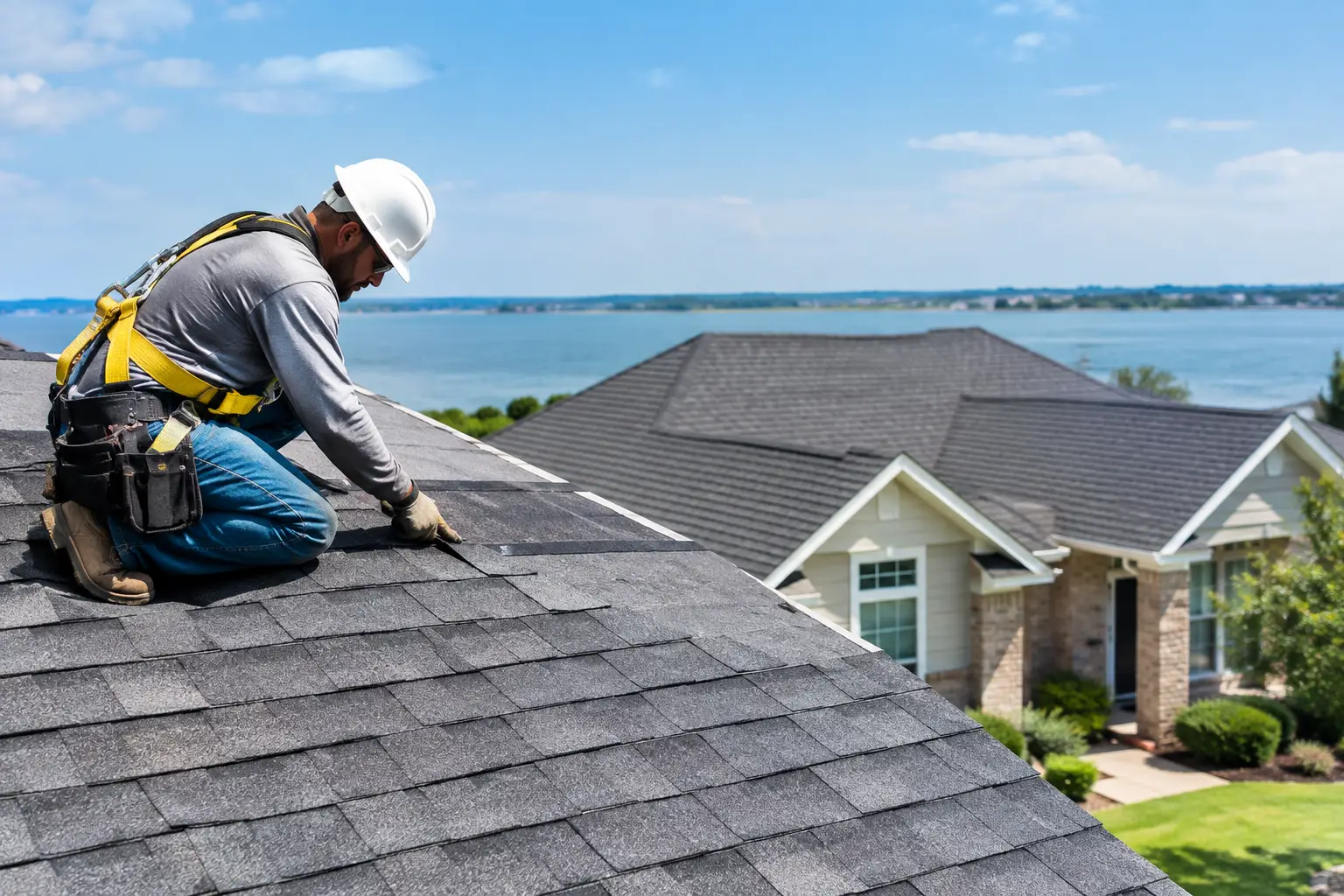
A roof rarely fails all at once. In Baytown, it often starts with a water stain after a hard rain, a few shingles in the yard, or a repair that holds for one storm and leaks during the next. Roof replacement Baytown property owners can feel confident about begins with finding the real condition of the roofing system, not guessing from the ground or reacting to a high-pressure sales pitch.
The right answer may be a targeted repair. It may be a full replacement. The difference matters because your roof protects far more than shingles - it protects decking, insulation, ceilings, equipment, inventory, and the structure itself. A careful evaluation gives you the information to make that decision with your eyes open.
When Roof Replacement in Baytown Makes Sense
Age alone does not automatically mean a roof needs to be replaced. Some roofs reach the end of their expected service life while still performing adequately. Others develop widespread damage early because of severe storms, poor installation, inadequate ventilation, or recurring drainage problems.
A replacement becomes more likely when damage is widespread rather than isolated. Missing or creased shingles across multiple slopes, exposed or deteriorated roofing materials, granule loss throughout the roof, and repeated leaks in different areas all point to a system-wide concern. On a commercial roof, open seams, ponding water, membrane deterioration, and recurring flashing failures may indicate that repairs are becoming a short-term expense instead of a long-term solution.
The condition below the surface matters too. Soft decking, rusted fasteners, damaged flashing, compromised pipe penetrations, and poorly integrated transitions can allow water to continue moving even after a visible leak seems repaired. That is why a useful assessment looks at the roof as a system.
| What you are seeing | What should be established first | Possible next step | |---|---|---| | A leak in one known location | Whether water entry is isolated to flashing, a penetration, or a damaged section | Focused repair may be appropriate | | Leaks returning after prior repairs | Whether the repair addressed the source and whether adjacent materials are failing | Repair or replacement comparison | | Shingles missing after a storm | The extent of wind damage and the condition of remaining shingles | Documented repair or insurance-supported replacement | | Worn roof with multiple trouble spots | Remaining service life, decking condition, and total repair exposure | Full replacement may offer better value | | Commercial roof drainage concerns | Membrane condition, seams, penetrations, slope, and ponding areas | Commercial repair plan or replacement assessment |
Start With Evidence, Not a Drive-By Estimate
A replacement proposal should be based on an on-roof inspection whenever conditions allow. Looking from the street can identify obvious concerns, but it cannot reliably show lifted shingles, failed seals, damaged flashing, soft areas, exposed fasteners, or the condition around roof penetrations.
Ask for inspection photos and a clear explanation of what they show. If there is storm damage, the documentation should separate observed damage from assumptions. No manufactured damage. No vague statement that a roof is “old” without showing why its present condition supports replacement.
A thorough roof evaluation should account for shingles or membrane materials, valleys, ridges, flashing, vents, skylights, chimneys, pipe boots, gutters, drainage paths, and visible decking concerns. For commercial properties, the contractor should also consider how the work affects building access, tenant operations, rooftop equipment, safety planning, and weather protection during the project.
Sure Claim Roofing provides no-obligation inspections designed to give Baytown-area owners a documented view of the roof before they decide on repair, replacement, or an insurance claim.
Compare Scopes, Not Just Bottom-Line Prices
Two roof replacement quotes can carry very different prices because they may include very different work. A lower price is not automatically wrong, but it should be easy to understand what is included and what has been left out.
Review the written scope line by line. It should identify the roofing material and manufacturer, tear-off requirements, underlayment, flashing work, ventilation components, pipe boots, drip edge where applicable, decking allowances or pricing, cleanup, disposal, and warranty information. If the proposal simply says “new roof” with a total price, ask for more detail before authorizing work.
Material selection also deserves a real conversation. Standard asphalt shingles remain a practical option for many homes because they provide reliable protection at a familiar price point. Impact-resistant shingles can be worth considering in storm-prone areas, though the higher material cost should be weighed against your property, insurance details, and long-term plans. Metal roofing can offer longevity and a distinct appearance, but installation details, budget, roof geometry, and noise expectations all deserve discussion.
For low-slope commercial roofs, TPO and commercial metal systems each have different strengths. TPO can be an effective choice for many flat or low-slope applications, while metal may suit certain building designs and long-term maintenance goals. Drainage, penetrations, rooftop equipment, and the building’s use often matter as much as the material itself.
What a Well-Managed Replacement Looks Like
A professional replacement is more than installing new materials. It is a controlled jobsite process with a defined scope, clear communication, and accountability for the details that keep water out.
Before work begins, confirm how vehicles, landscaping, gates, pets, outdoor furniture, and access areas will be handled. Homeowners should understand the anticipated start window, the likely duration, and whom to contact if a question comes up. Commercial owners and facility managers should also discuss staging, occupied areas, delivery routes, safety requirements, noise, parking, and ways to protect operations.
During tear-off, hidden conditions may appear. Decking can be damaged beneath old materials, and flashing details may need more work than was visible during the initial inspection. This does not mean every added charge is justified. It means the contractor should show you the condition, explain the recommended correction, and document any change before proceeding whenever possible.
At the end of the job, the work should be reviewed rather than treated as a handoff from a distance. Confirm that the agreed materials were installed, debris has been removed, and the site is clean. Keep the written scope, photos, warranty documents, and final paperwork in a place you can find later.
Handling Storm Damage and Insurance Questions
A storm-damaged roof can create two separate decisions: what the roof needs and how insurance may respond. The first should not depend on the second. An inspection can establish visible conditions and immediate protection needs, while the insurance process determines whether covered damage is approved under your policy.
If you plan to file a claim, keep photos of interior leaks, fallen materials, and any temporary protective measures. Read your deductible and ask questions about what the insurer’s estimate includes. An experienced local contractor can help document roof conditions, provide a written scope, and meet with an adjuster when appropriate, but the property owner remains in control of the claim and the final repair decision.
Be cautious with anyone who promises a “free roof” or asks you to sign before you understand the scope. A legitimate contractor should be comfortable giving you time to review the proposed work, compare it fairly, and ask direct questions about materials, pricing, workmanship, and responsibility for unforeseen conditions.
Choose the Next Step Based on What the Roof Shows
If water is actively entering the building, arrange emergency protection and an inspection promptly. If the concern is aging materials or storm wear without an active leak, schedule an evaluation before another season of heavy rain turns a manageable issue into interior damage.
The useful question is not simply, “Do I need a new roof?” It is, “What does my roof need now, what can wait, and what proof supports that recommendation?” A documented answer gives you a better way to protect your property - and a clearer basis for deciding when replacement is the right move.