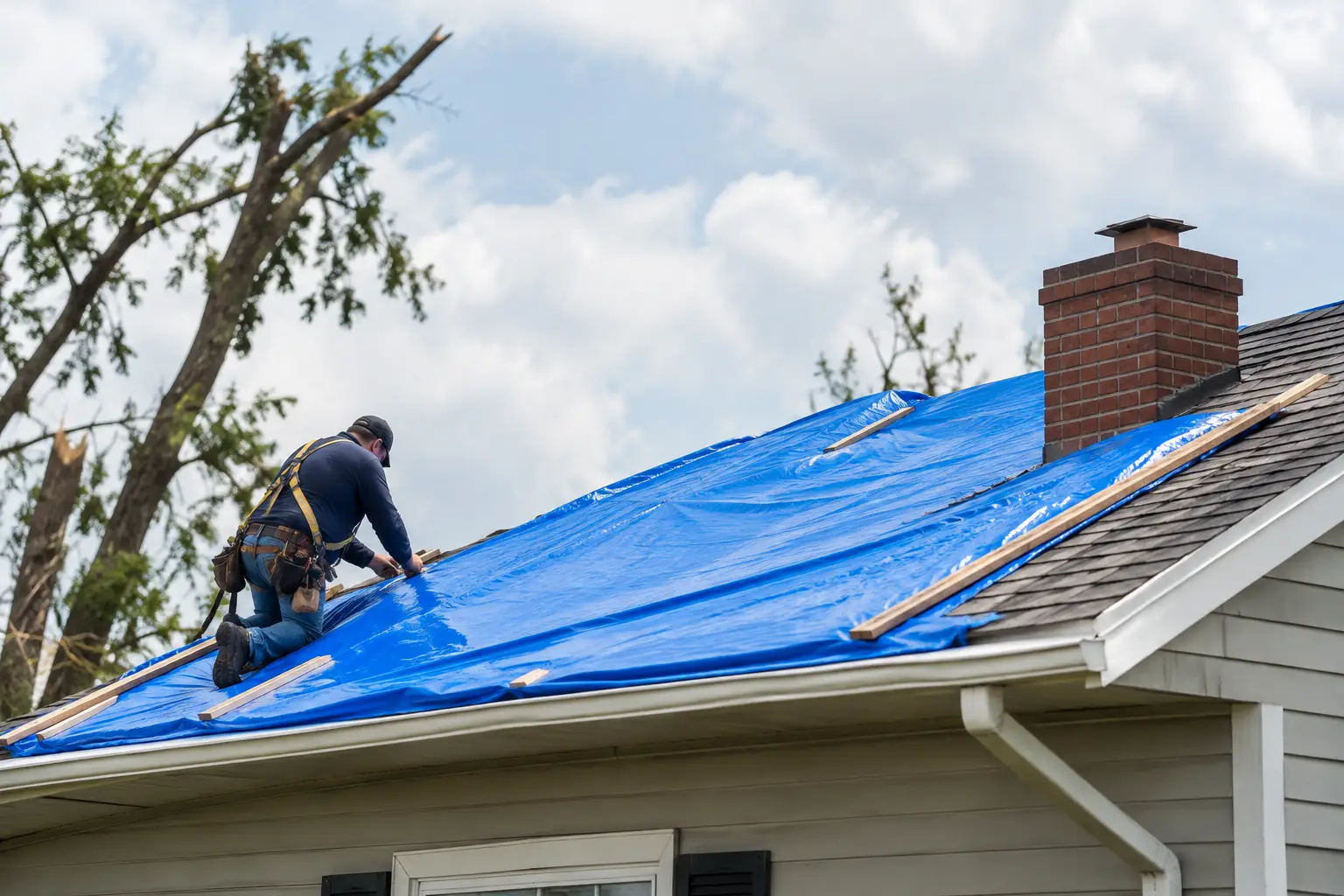
A temporary roof tarp after storm damage can be the difference between a contained roofing repair and soaked insulation, stained ceilings, damaged inventory, or a growing mold problem. But a tarp is not a repair, and putting one on incorrectly can create more damage or create a serious fall hazard. The first priority is protecting people and the interior of the building. The next is getting clear evidence of what happened before decisions are made.
For homeowners and property managers in Baytown and across East Texas, that usually means documenting the visible issue, limiting water intrusion from a safe location, and scheduling an on-roof evaluation as soon as conditions allow.
What a temporary roof tarp after a storm is meant to do
A roof tarp is an emergency protective covering installed over a damaged area to shed rain until permanent repairs can be completed. It may cover missing shingles, exposed roof decking, storm-damaged flashing, a puncture in a low-slope membrane, or an opening caused by a fallen limb.
Its job is simple: redirect water away from the opening. It does not restore the roof system, prove the full extent of storm damage, or guarantee that no water entered beneath the roofing materials before it was installed.
A properly secured tarp can buy time during a rainy stretch or while an insurance claim is being reviewed. That is especially valuable when an active leak affects living space, electrical fixtures, a commercial tenant area, equipment, or stored materials. Still, the condition beneath the tarp needs to be inspected. Wind can loosen fasteners, water can travel away from the visible stain, and a small opening can conceal wet decking or damaged underlayment.
First, decide whether the situation is safe for tarping
After a storm, the temptation is to climb up immediately and stop the leak. That is understandable, but wet shingles, loose debris, damaged decking, overhead power lines, and continuing wind make storm-damaged roofs dangerous. A tarp should not require a homeowner, employee, or building manager to take an unsafe risk.
Start from the ground if possible. Look for missing shingles, displaced metal panels, tree limbs, torn flashing, sagging areas, or debris around roof drains. Inside, note ceiling stains, dripping water, bubbling paint, damp insulation, or water near electrical equipment. Move belongings away from the affected area and use buckets or plastic sheeting indoors to protect floors and contents.
Call emergency services if there is structural instability, a downed power line, fire risk, or water entering electrical panels. For a commercial property, protect occupants first and consider whether the affected area needs to be closed until it can be evaluated.
What to document before anyone covers the damage
Good documentation supports better repair decisions and can be useful when filing an insurance claim. Take photos and short videos from safe locations before the tarp goes on, then photograph the tarp after installation. Capture wide shots that show the affected roof area and close shots of interior water damage, damaged personal property, and debris.
Keep a simple timeline with the storm date, the time you first saw the problem, weather conditions, and every temporary step taken. Save receipts for emergency mitigation, including tarping or water removal. Do not throw away damaged materials unless your insurer tells you to do so or they create a safety concern.
Documentation is not a substitute for an inspection. Wind damage can be subtle, and the location of an interior leak is not always directly below the roof opening. Water may enter at flashing or a penetration and travel along framing before it appears at a ceiling.
How a tarp should be installed
The right method depends on roof type, slope, damage location, and weather conditions. On a shingle roof, the upper edge of a tarp generally needs to extend above the damaged area so water flows over it rather than beneath it. On TPO, modified bitumen, metal, and other commercial roof systems, the approach can be different because seams, drainage paths, curbs, and rooftop equipment affect how water moves.
A tarp must be large enough to cover the damaged area with meaningful overlap. It should be secured so it will not flap in the wind or trap water. Fastening through undamaged roofing should be minimized and planned carefully because unnecessary penetrations can become additional leak points.
Avoid simply throwing a tarp across the roof and weighting it down with loose bricks, patio furniture, or other objects. Those items can slide, puncture the covering, damage the roof, or become windborne. Also avoid nailing directly through a tarp without considering the roof system below it. An emergency covering should reduce exposure, not add a row of new holes.
If the roof is steep, wet, high, structurally questionable, or near power lines, call a qualified roofing professional rather than attempting a do-it-yourself installation. The cost of a professional emergency response is often far less than the cost of a fall or expanded damage.
When a tarp is appropriate and when it is not
Not every storm-related roofing concern needs a tarp. A few lifted shingles without an active leak may need prompt inspection and repair, but covering a large portion of the roof could be unnecessary. On the other hand, exposed decking, a torn membrane, a puncture, or water actively entering the building calls for fast protective action.
| Situation | What should be established first | Likely next step | |---|---|---| | Active interior leak | Where water is entering and whether electrical or structural risks exist | Emergency mitigation and roof evaluation | | Missing shingles or exposed decking | Size of the opening and forecasted rain risk | Tarping followed by a documented repair scope | | Fallen limb on the roof | Whether decking, framing, or penetrations are damaged | Safe debris removal, tarp if needed, then inspection | | Recurring leak after past repairs | Whether the leak source differs from the visible ceiling stain | Full evaluation of shingles, flashing, penetrations, and decking | | Commercial flat-roof leak | Membrane condition, drainage, seams, and occupied-building impact | Targeted temporary protection and commercial roof assessment |
A tarp can also hide evidence if it stays in place too long. Once weather permits, the roof should be examined, photographed, and given a written scope that explains what is damaged, what can be repaired, and whether replacement should be considered.
What an inspection should look for after the tarp is removed
A useful inspection goes beyond checking whether the tarp kept rain out. The roof should be evaluated for missing, creased, torn, or lifted shingles; damaged ridge and hip materials; compromised flashing around chimneys, walls, vents, and skylights; damaged pipe boots; exposed or softened decking; and signs that water entered the attic.
For metal roofing, the inspection should include panels, fasteners, seams, ridge details, penetrations, and flashing. For TPO and other low-slope commercial systems, the inspector should look at membrane punctures, open seams, ponding water, drains, scuppers, parapet transitions, curbs, and rooftop equipment details.
Ask for photos of the conditions found and a written explanation of the recommended work. If the roof can be repaired, the scope should identify the affected area and the materials being replaced. If replacement is recommended, you should understand why isolated repairs are not expected to solve the problem or maintain the roof's performance.
Insurance claim considerations after storm damage
Most policies require property owners to take reasonable steps to prevent further damage. A temporary tarp may be part of that effort, but coverage depends on the policy, the cause of loss, the deductible, and the insurer's findings. No roofing contractor should promise claim approval or manufacture damage to force a claim.
Report the loss promptly if you believe the storm caused covered damage. Provide your documentation, keep records of emergency expenses, and review your policy before authorizing major work. If an adjuster inspects the property, having inspection photos and a clear scope of work helps keep the conversation focused on visible conditions and necessary repairs.
Sure Claim Roofing can evaluate storm-related roof conditions, provide photo-supported documentation, and help property owners understand the repair or replacement options before they decide how to proceed.
Do not let the tarp become the long-term plan
Tarps degrade under sun, wind, and standing water. Their fasteners can loosen, and hidden moisture can continue affecting decking, insulation, drywall, and framing. A tarp installed for emergency protection should lead to an inspection and a defined next step, not months of uncertainty.
If you can see storm damage, have water inside, or are unsure whether an emergency covering is needed, tell a local roofing professional what you are seeing. A careful evaluation gives you something more useful than a temporary patch: visible proof, a clear scope, and enough information to protect the property with confidence.