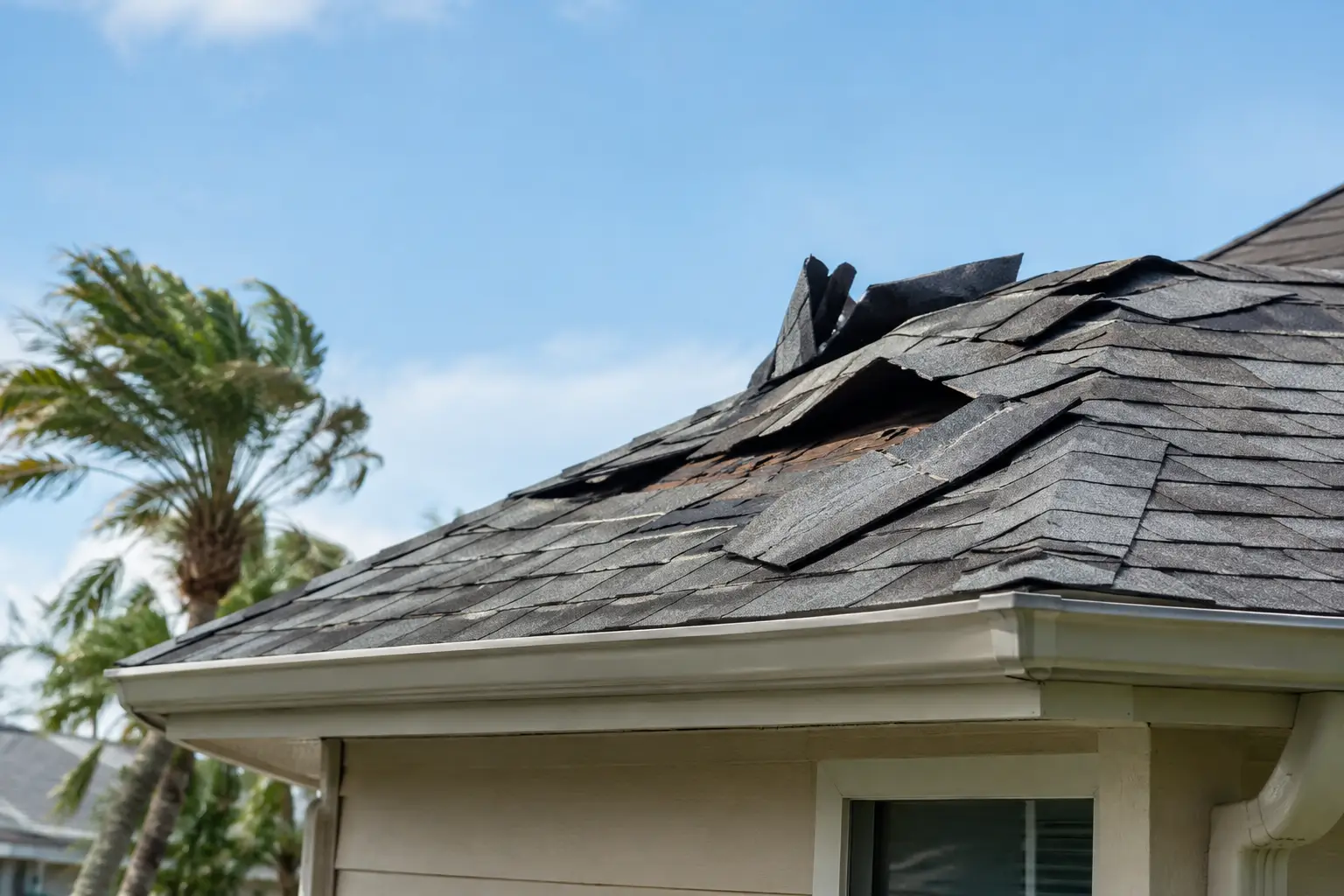
A shingle does not have to blow completely off the roof to create a problem. Wind lifted shingles may settle back into place after a storm, leaving a roof that looks mostly normal from the yard while its seal, nail area, or underlying water barrier has been compromised. In Baytown and across East Texas, that is a common reason a leak appears weeks or months after the weather has cleared.
The right next step is not to assume the roof needs replacement, and it is not to wait for an interior stain. It is to establish what actually moved, whether the shingles can reseal, and whether water has reached the roof deck or interior. A close, documented roof evaluation gives you a basis for choosing repair, monitoring, or replacement.
Why Wind Lifted Shingles Need a Closer Look
Asphalt shingles are designed to overlap and seal together. Their lower edges are bonded by adhesive strips, while nails secure the upper portion beneath the next course of shingles. High wind can break that adhesive bond and lift the exposed edge. If the shingle bends sharply, creases, tears, or pulls around its nails, it may no longer protect the roof as intended.
A lifted shingle creates a path for wind-driven rain to reach areas that should remain dry. That does not always cause an immediate ceiling leak. Water may travel along the underlayment, decking, framing, or insulation before it becomes visible indoors. By then, the original storm event can feel unrelated.
This is why a driveway-level look is rarely enough. A roof can have lifted tabs on one slope, damaged ridge shingles, or loosened flashing that cannot be confirmed safely from the ground. The condition of the surrounding shingles matters, too. A newer roof with isolated lifting calls for a different conversation than an aging roof with widespread brittle shingles and failed seals.
What Wind Damage Can Look Like From the Ground
Homeowners should not climb on a steep, wet, or storm-damaged roof. You can still make useful observations from the ground and inside the building. Look for shingles that appear raised, uneven, curled, torn, or missing. Check gutters and landscaping for granules, shingle pieces, nails, or metal flashing fragments after a storm.
Inside, inspect the attic if it is safe and accessible. Fresh water marks on framing, damp insulation, a musty odor, or daylight near roof penetrations may point to a problem. In living areas, note ceiling discoloration, bubbling paint, or moisture around exterior walls. Take photos and record when you first noticed each issue.
These observations help, but they do not identify the full scope. A raised shingle may have a broken seal only, or it may have a crease that makes it unsuitable for reuse. A stain may come from wind-lifted shingles, but it could also originate at a vent pipe boot, chimney flashing, valley, skylight, or an HVAC penetration.
What a Proper Roof Evaluation Should Establish
Before anyone recommends repair or replacement, the inspection should answer a few practical questions: Which roof slopes are affected? Are the shingle seals broken? Are shingles creased, torn, or pulled free at the fasteners? Is the roof deck dry and sound? Have flashing, vents, ridge caps, gutters, or other components been affected?
An on-roof evaluation should also compare the damaged area with the rest of the roofing system. This prevents a narrow repair from being presented as a solution when the roof has a larger condition issue. It also prevents the opposite mistake: treating every lifted tab as a reason to replace a roof that is otherwise serviceable.
Photos matter here. Clear photos of lifted shingles, nail pull-through, exposed underlayment, damaged flashing, and interior moisture give a property owner something concrete to review. A written scope should then explain what will be repaired, what materials will be used, and what conditions could change the scope once work begins.
| What you are seeing | What needs to be established first | Likely next step | |---|---|---| | A few lifted or missing shingles after a recent storm | Whether shingles are creased, seals are broken, and surrounding materials are intact | Targeted repair may be appropriate | | An active ceiling leak | Exact entry point, deck condition, and whether water is still entering | Emergency protection and repair assessment | | Several roof slopes with loose, brittle, or damaged shingles | Roof age, extent of damage, repairability, and matching material availability | Compare repair and replacement scopes | | A recurring leak near a vent, wall, or chimney | Condition of flashing, penetrations, and nearby shingles | Detailed leak diagnosis, not guesswork | | A commercial roof with loose edge materials or leaks | Membrane or metal condition, drainage, penetrations, and occupied-building constraints | Commercial roofing assessment |
When Repair Makes Sense
Repair is often a sensible option when damage is limited and the roof still has useful service life. For example, a small area of wind-lifted shingles may be repaired if replacement shingles are available, the surrounding shingles are flexible enough to work with, and the deck and flashing are in good shape.
A careful repair may involve replacing damaged shingles, restoring proper fastening, addressing underlayment exposure, and correcting nearby flashing or ventilation components. The goal is not simply to press a lifted shingle down. If the adhesive strip has failed or the shingle is creased, it may not reseal reliably, especially under the next round of Gulf Coast wind and rain.
Color matching is one trade-off to discuss honestly. Even when the same shingle line is available, sun exposure and weathering can make new shingles look different from the existing field. That may be acceptable for a small, less-visible repair. On a highly visible slope or a roof with broad damage, the appearance and long-term performance questions can make a replacement comparison worthwhile.
When Replacement Deserves Consideration
Wind damage can expose a roof that was already near the end of its service life. If shingles are brittle, cracking, losing substantial granules, lifting across multiple slopes, or showing repeated repair history, replacing isolated sections may become less practical. The same is true when matching material is unavailable or when repair work would disturb fragile shingles beyond the original damaged area.
Replacement is a larger investment, so the scope should be clear. Ask what will happen at the tear-off, whether damaged decking will be documented, how flashing and penetrations will be handled, and what materials are included. A quote should identify the shingle system, underlayment, ice and water protection where applicable, ventilation considerations, ridge components, cleanup, and warranty information.
For insurance-related storm damage, documentation is especially useful. Keep storm-date notes, inspection photos, prior repair records, and any interior damage photos. Your policy, deductible, roof age, and the cause of loss all affect coverage. A contractor can provide condition evidence and a repair or replacement scope, but the carrier makes the coverage decision. Be cautious with anyone offering to create damage or promising an outcome before the roof has been evaluated.
Do Not Let a Small Opening Become a Larger Repair
The period after a storm is when property owners are most likely to receive quick, vague offers. A roof is too significant an investment to authorize work based on a glance from the ground or a generic estimate. Ask to see the affected areas, review the proposed work before you decide, and make sure the person recommending the repair can explain why that specific work is needed.
If water is actively entering the building, move belongings away from the affected area, catch dripping water safely, and avoid electrical fixtures near moisture. Do not cover roof openings yourself in dangerous conditions. Temporary protection can limit additional water entry, but it should not replace finding and correcting the source.
Sure Claim Roofing approaches wind concerns with an on-roof evaluation, photo-supported findings, and a written scope so Baytown-area property owners can make a decision based on evidence rather than pressure. Tell us what you are seeing, including the storm date, visible shingle changes, and any interior moisture. A clear inspection is often the fastest way to replace uncertainty with a practical next step.