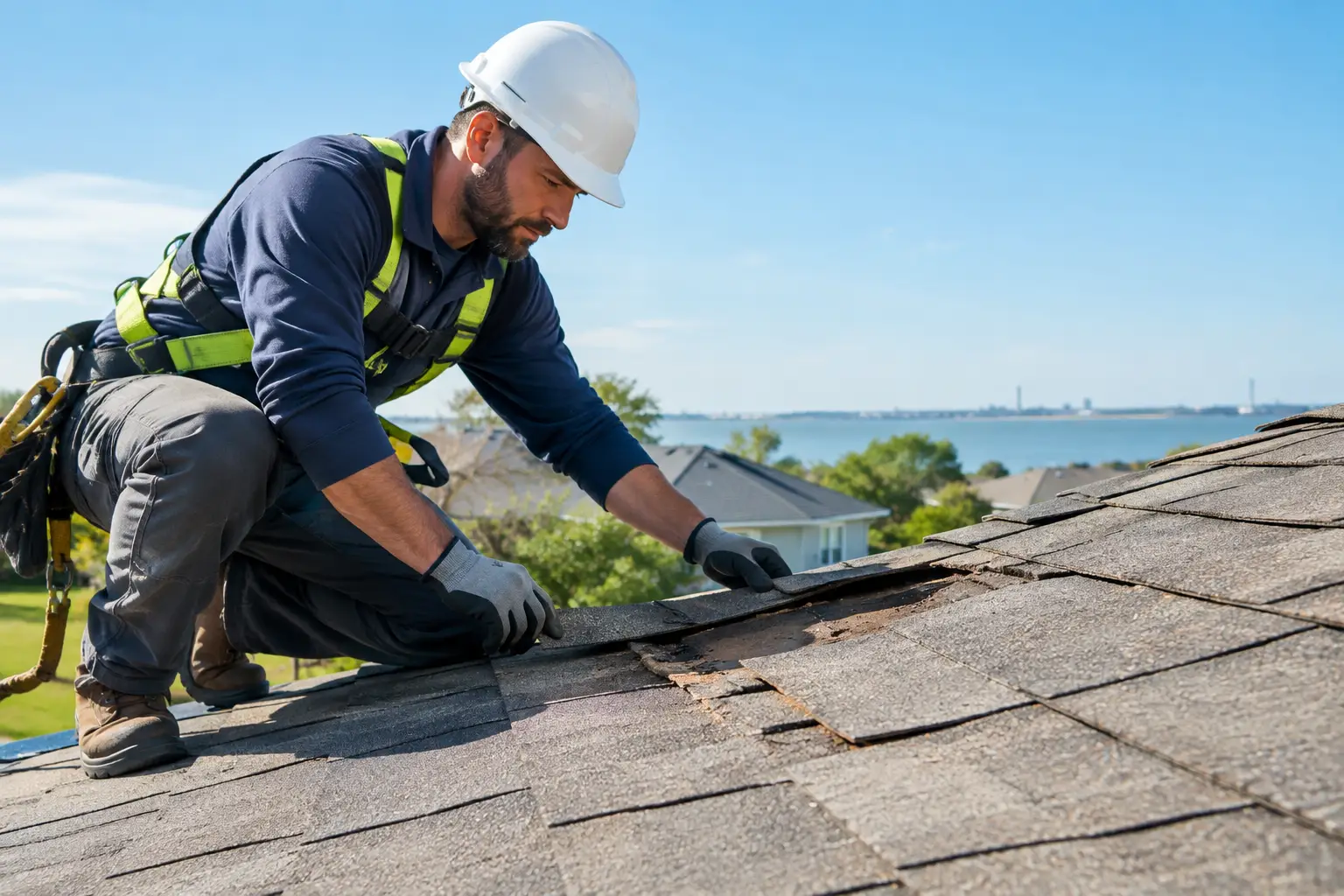
A roof leak rarely starts with a dramatic ceiling collapse. In Baytown, it often shows up as a brown ring near a light fixture after a hard rain, a damp wall after wind-driven weather, or water dripping from a commercial ceiling tile. When that happens, emergency roof repair Baytown property owners need is not guesswork or a drive-by sales pitch. It is a clear assessment of where water is entering, what it has affected, and what needs to happen now to prevent a larger loss.
The visible leak is not always directly below the roof failure. Water can travel along decking, rafters, insulation, conduits, or ceiling framing before it appears indoors. That is why a proper emergency response starts with safety and evidence, then moves to a documented on-roof evaluation.
What Counts as a Roofing Emergency?
An active interior leak deserves prompt attention, especially when water is near electrical fixtures, insulation, drywall, inventory, equipment, or occupied areas. Missing shingles after a storm, lifted flashing around a chimney or wall, punctured flat roofing, and damage from a fallen branch can also require immediate temporary protection.
Not every roof concern needs a midnight repair. A few granules in a gutter or a single aging shingle may be a maintenance issue rather than an emergency. The difference is whether the roof is allowing water into the building now, or is likely to do so before the next weather event.
| What you are seeing | What should be established first | Likely next step | |---|---|---| | Water dripping indoors | Whether water is near electricity and where it is collecting | Interior protection, moisture documentation, roof evaluation | | Missing or lifted shingles | How much roofing is exposed and whether underlayment is damaged | Temporary weather protection and repair scope | | Recurring leak in the same area | Whether prior repairs addressed the actual entry point | Full evaluation of flashing, penetrations, decking, and drainage | | Flat-roof ponding or seam separation | Whether drains are blocked or the membrane has opened | Drainage assessment and membrane repair plan | | Tree or impact damage | Whether the deck, structure, or roof covering is compromised | Safe stabilization, documentation, and repair or replacement review |
What to Do Before a Roofer Arrives
Start inside the building. Move furniture, electronics, merchandise, or stored belongings away from the affected area. Place containers under active drips and use towels to limit water spread. If a ceiling is sagging or holding water, keep people out of that room. A water-loaded ceiling can fail without much warning.
If water is near a light fixture, outlet, electrical panel, or exposed wiring, do not touch it. Turn off power to the affected area only if you can do so safely from a dry location. When there is any doubt, contact a qualified electrician or emergency service provider before entering the space.
Take photos and short videos of the interior staining, dripping, wet insulation, damaged contents, and any visible exterior damage from the ground. Note when the leak began and the weather conditions at the time. This information helps identify patterns and can support an insurance claim if storm damage is involved.
Avoid climbing onto the roof during rain, high winds, or after dark. Wet shingles, metal panels, and low-slope membranes are dangerous even for experienced roofers. A tarp installed incorrectly can create additional punctures, trap water, or pull loose in the wind. The goal is to limit damage, not turn a roof leak into an injury.
Why the Leak Location Is Only Part of the Story
A reliable repair depends on identifying the failure point, not simply sealing the area above the interior stain. On a shingle roof, the source may be damaged or missing shingles, but it may also be exposed nail heads, failed pipe flashing, deteriorated wall flashing, valleys, ridge caps, or improperly installed transitions.
On commercial TPO and metal roofing, the investigation is different. Open seams, failed flashing at curbs and penetrations, membrane punctures, fastener issues, deteriorated sealant, and poor drainage can all allow water in. A warehouse or retail roof may also have multiple layers of roofing, rooftop equipment, and drainage conditions that complicate the repair.
Decking matters as well. If water has been entering for a while, the roof deck can soften or deteriorate beneath the visible roofing material. A repair that ignores compromised decking may look acceptable from the ground but will not provide a dependable base for new materials.
This is why photo-supported findings are useful. They let homeowners, building owners, and managers see the actual condition of the shingles, flashing, penetrations, decking, drains, or membrane seams before approving work.
Emergency Repair or Full Replacement? It Depends
A focused repair can make sense when the damage is isolated and the surrounding roof system is still in serviceable condition. For example, a recent wind event may have removed shingles from one slope while the rest of a newer roof remains sound. Replacing damaged components, restoring flashing, and sealing affected details may be the responsible solution.
Replacement may be the better value when leaks keep returning, repairs are scattered across multiple areas, shingles are broadly worn or brittle, or the roof is near the end of its expected service life. On commercial roofs, widespread seam failure, recurring ponding, or extensive membrane deterioration may point to a larger restoration or replacement conversation.
The lowest immediate price is not always the lowest cost. A small repair can be appropriate, but repeating it every few months is frustrating and expensive. On the other hand, recommending replacement for a localized, repairable problem does not serve the property owner either. The right decision should follow documented conditions, not a sales quota.
What a Proper Emergency Roof Inspection Should Include
An emergency inspection should begin with the reported problem and expand to the roof components that could be contributing to it. Tell the contractor what you are seeing, when it occurs, and whether the issue follows heavy rain, wind from a certain direction, or standing water.
A thorough on-roof evaluation typically reviews the field of the roof, shingles or membrane, flashing, valleys, ridge areas, vents, pipe penetrations, walls, gutters, drains, scuppers, and visible decking concerns. The inspector should also consider attic evidence when accessible, including wet insulation, staining, ventilation conditions, and the path water may have taken.
Ask for photos and a written scope that separates immediate protection from permanent work. If insurance may be involved, keep the documentation organized. Insurers make their own coverage decisions, but clear photos, dates, descriptions, and repair findings can help establish what happened and what work is necessary.
Sure Claim Roofing provides on-roof evaluations and written scopes so Baytown-area property owners can review the proposed work before deciding. That matters after a storm, when rushed decisions and vague estimates can leave important details unanswered.
Watch for These Warning Signs After the Leak Stops
A leak that stops when the rain stops has not necessarily resolved itself. Check the affected area over the following days for expanding stains, peeling paint, a musty odor, soft drywall, bubbling ceiling texture, or wet insulation. These signs can indicate moisture remains even when there is no active drip.
Outside, look from the ground for displaced shingles, exposed roof areas, bent metal, debris in gutters, damaged fascia, or branches resting on the roof. Do not assume a roof is fine because it looks normal from the driveway. Wind damage can be subtle, particularly around ridge caps, valleys, vents, and roof edges.
For commercial properties, inspect ceilings, walls, inventory zones, electrical rooms, and areas beneath rooftop units after severe weather. Document any impact on operations. A small opening at a penetration can become a much bigger issue when water reaches insulation, interior finishes, or sensitive equipment.
Questions to Ask Before Authorizing Work
A clear conversation protects both the property owner and the contractor. Ask where the water is believed to be entering, what evidence supports that conclusion, and whether the proposed work is temporary or permanent. Ask what materials will be used, whether damaged decking is included if discovered, and how the area will be protected if weather returns during the work.
For an insurance-related loss, ask for an itemized scope and photos that match the observed damage. You should understand what is included, what may be additional if hidden conditions are found, and who is responsible for communicating changes. A contractor should be able to explain the work in plain language without manufacturing damage or pushing you to sign before you have the facts.
A fast response matters when water is entering your home or building. Just as important is making the next decision with a clear view of the roof’s actual condition. Protect the interior, document what you see, stay off the roof, and ask for evidence before you authorize the repair.