How to Choose Roof Shingle Colors for Your House
October 27, 2026 · Sure Claim Roofing LLC
Need a Roof Inspection?
Free, no-obligation. 7 days a week in Baytown and East Texas.
Book Free Inspection(281) 691-0552Choosing roof shingles gets confusing when a small brown sample looks gray outside, a black roof looks softer in a photograph, and every preview makes your house look different. You do not need to become a designer to make a sensible choice. You need a repeatable comparison.
Start with the exterior materials that will stay, compare two or three roof color families on the same house, and confirm the exact product with full-size shingle samples before ordering. There is no single correct roof color for every brick or sided home.
This guide walks you through that process using three exterior palettes. You can use the examples and checklist with any roofing contractor.
First, separate a color illustration from a product sample
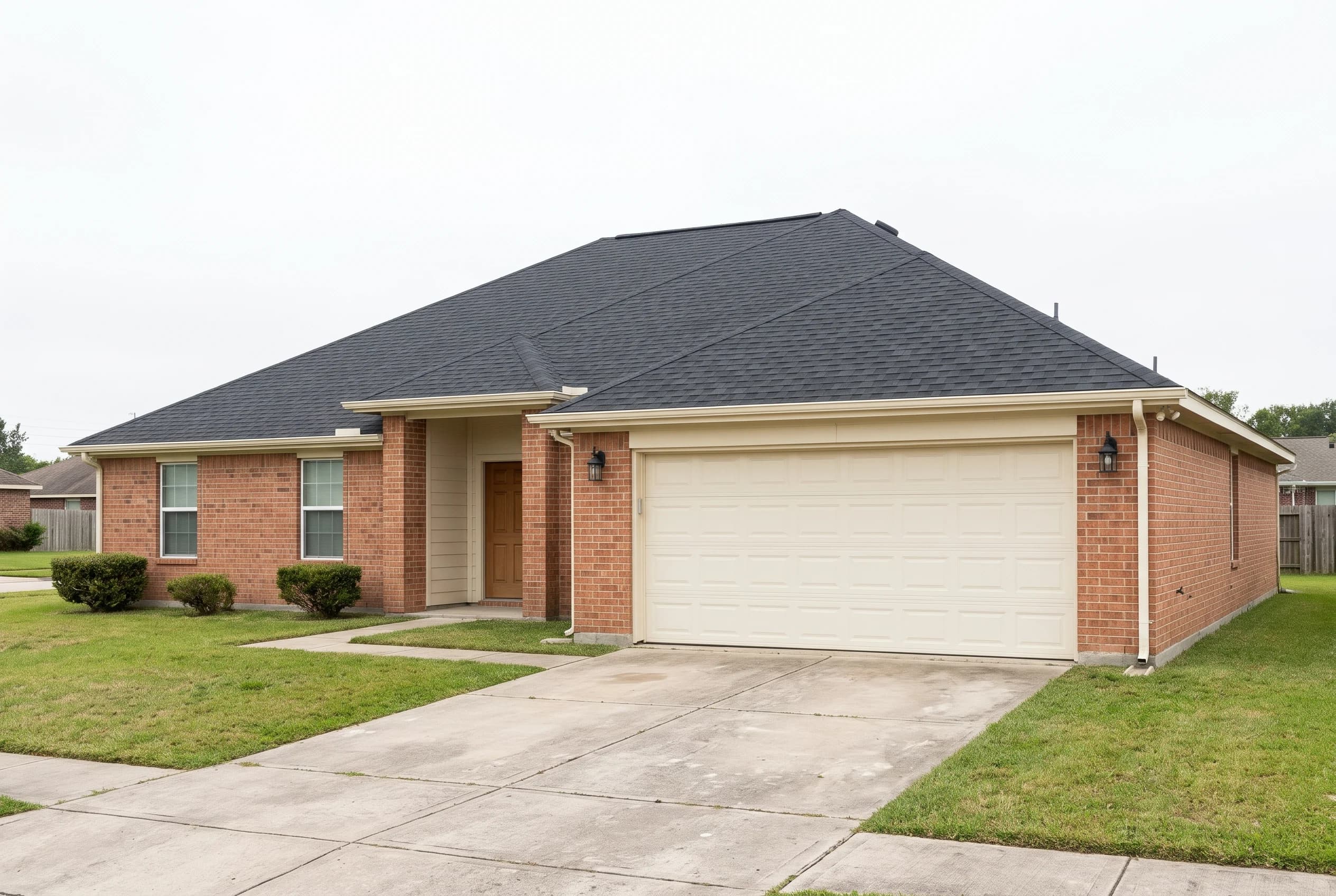
The nine comparison images below are AI-generated illustrations of generic roof color families. They are not photographs of SureClaim projects, manufacturer color samples, or promises of an exact installed appearance. Each group keeps the house and viewpoint consistent so you can concentrate on the roof.
The labels mean charcoal, warm brown and gray-brown blends. They do not identify a particular manufacturer's product. A color name that sounds similar across brands or product lines is not a reliable match.
Even manufacturer visualizers need a physical check. GAF specifically warns that screens can represent colors differently and recommends viewing actual full-size samples before selection. Use a preview to narrow your choices, then make the final decision from the real material. GAF, undated
Step 1: Look at what will stay on your house
Before opening a color chart, walk around the exterior and write down the finishes you expect to keep:
- Brick and its mortar, or the main colors in stone.
- Siding, stucco and any approved repainting plans.
- Fascia, gutters, window frames, garage door and front door.
- A detached garage or other roof you want to coordinate with.
Start with large, difficult-to-change surfaces. If your brick will remain orange-red, choose against that brick rather than an imagined future white exterior. If repainting is already planned, compare the actual paint sample with the roof candidates too.
For a Baytown or Houston home with both masonry and siding, include both in the comparison. Cropping the photo to show only a roof and white garage door can hide the very brick or stone that makes a color feel wrong.
Step 2: Understand undertones without overcomplicating them
An undertone is the warmer or cooler cast beneath a color's first impression. A gray can lean brown, blue or green. A white can look creamy beside one sample and crisp beside another.
Put the candidates beside your exterior instead of trying to name the undertone from memory. Does a roof sample repeat something already in the brick or stone? Does it introduce a contrast you enjoy? Does it make a finish you liked suddenly look pink or yellow?
Owens Corning's exterior-palette guidance explains these warm and cool differences and recommends comparing physical exterior samples together. Treat that as a way to notice relationships, rather than a rule that every finish must have the same temperature. Owens Corning, undated
Example 1: Roof colors for a red or orange brick house
Same house, three roof-color families. Open an image for a larger view.
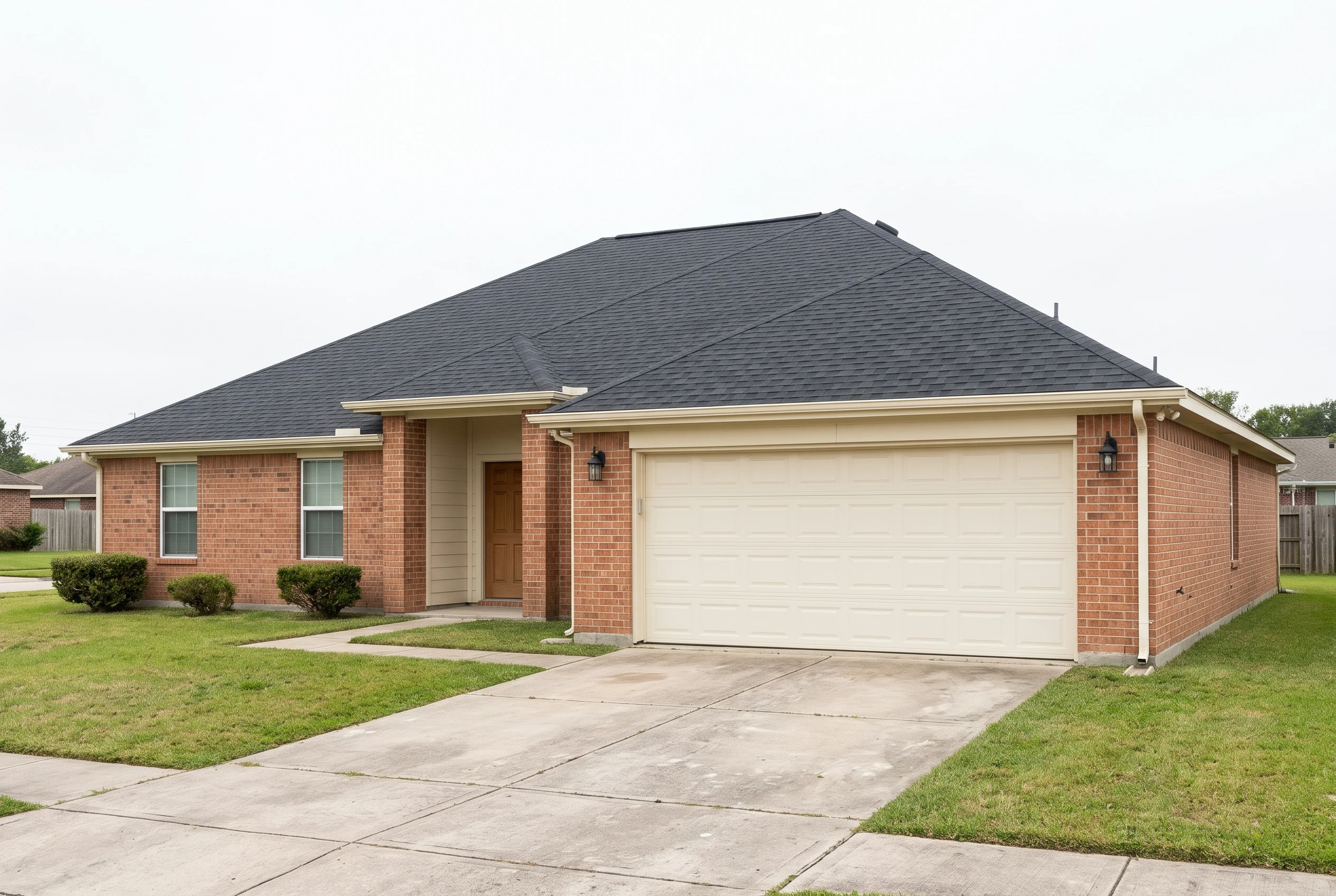
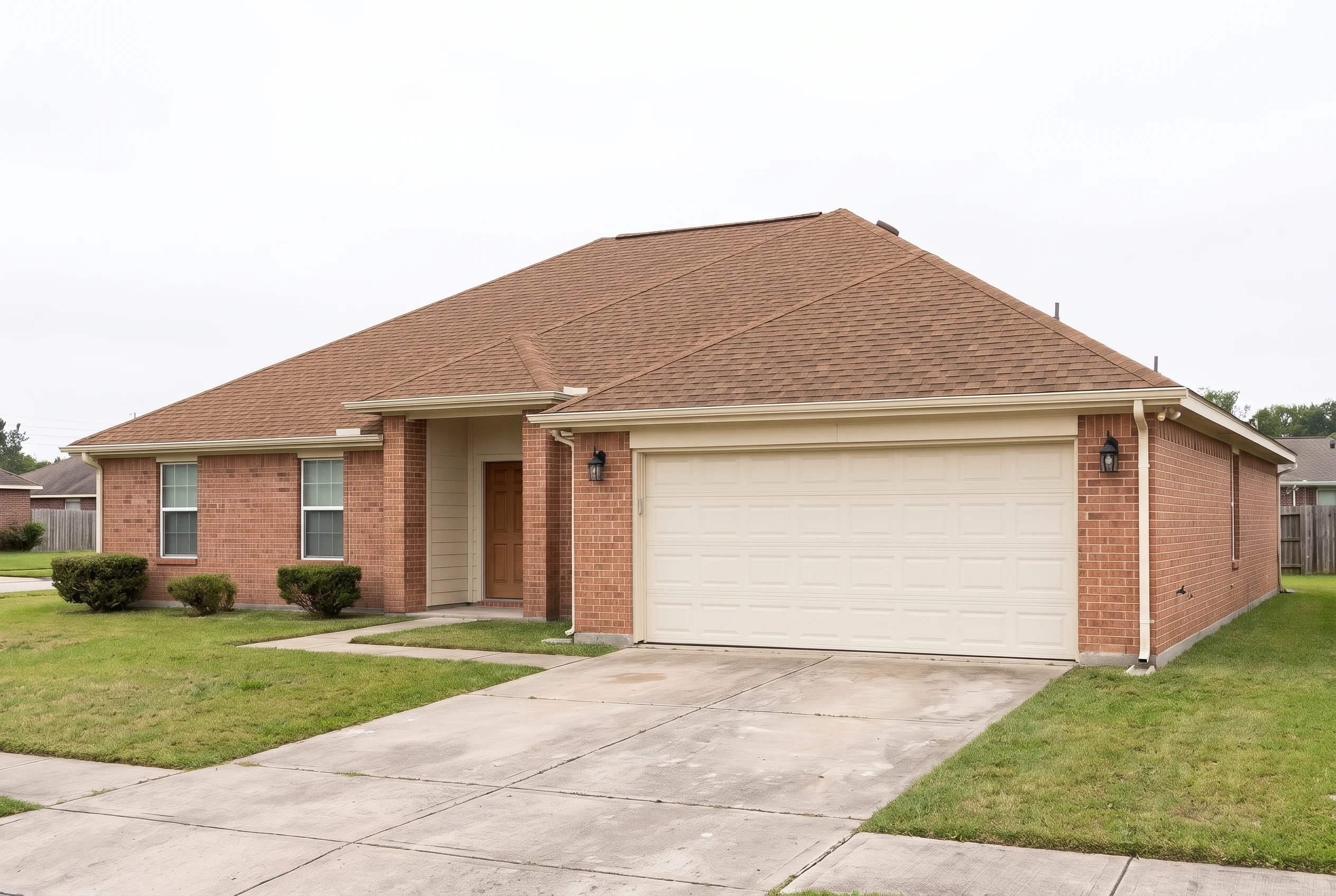
Higgsfield AI-generated illustrations of fictional homes, not SureClaim projects or exact manufacturer colors. These previews compare general color relationships; confirm the actual shingle with physical samples.
What stays: warm red-orange brick, cream trim and a cream garage door.
Charcoal: Creates a distinct dark edge above the brick. This is worth testing if you want the brick to remain prominent while the roof reads as a simpler background. Check that the actual sample does not have an unexpected blue cast.
Warm brown: Repeats the earthy warmth in the walls. The result can feel more blended. Watch how much red or orange appears in the shingle mix: repeating every warm tone can make the whole exterior feel busier than you intended.
Gray-brown blend: Offers a middle direction between strong dark contrast and a warmer brown roof. Look for whether the blend connects with your mortar and trim, rather than choosing it simply because its name sounds neutral.
Your next step: Take your two favorites outside beside both the brick and mortar. View them together, then separately, so the comparison does not depend on which sample happens to be next to the other.
Example 2: Roof colors for tan or beige brick
Same house, three roof-color families. Open an image for a larger view.
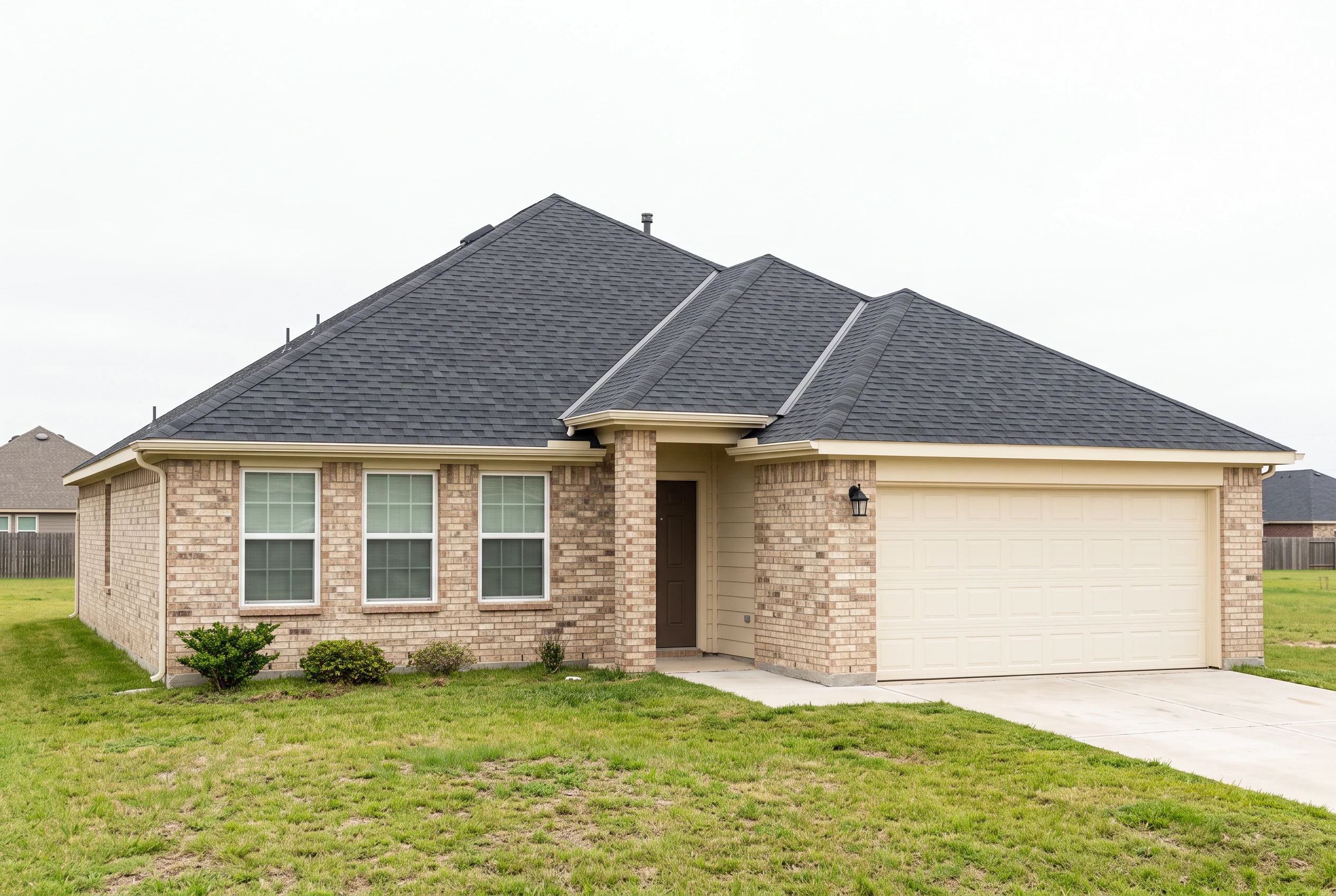
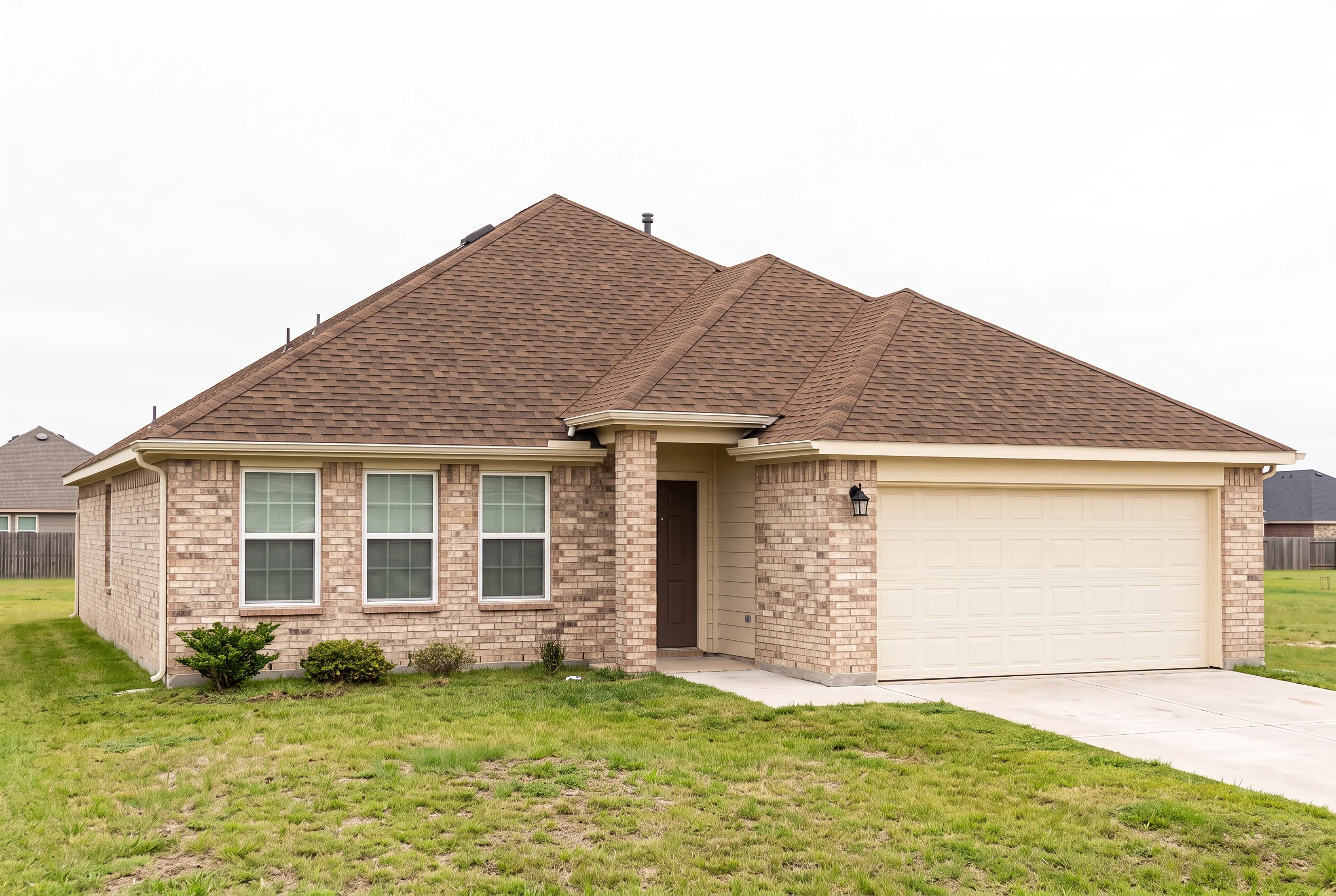
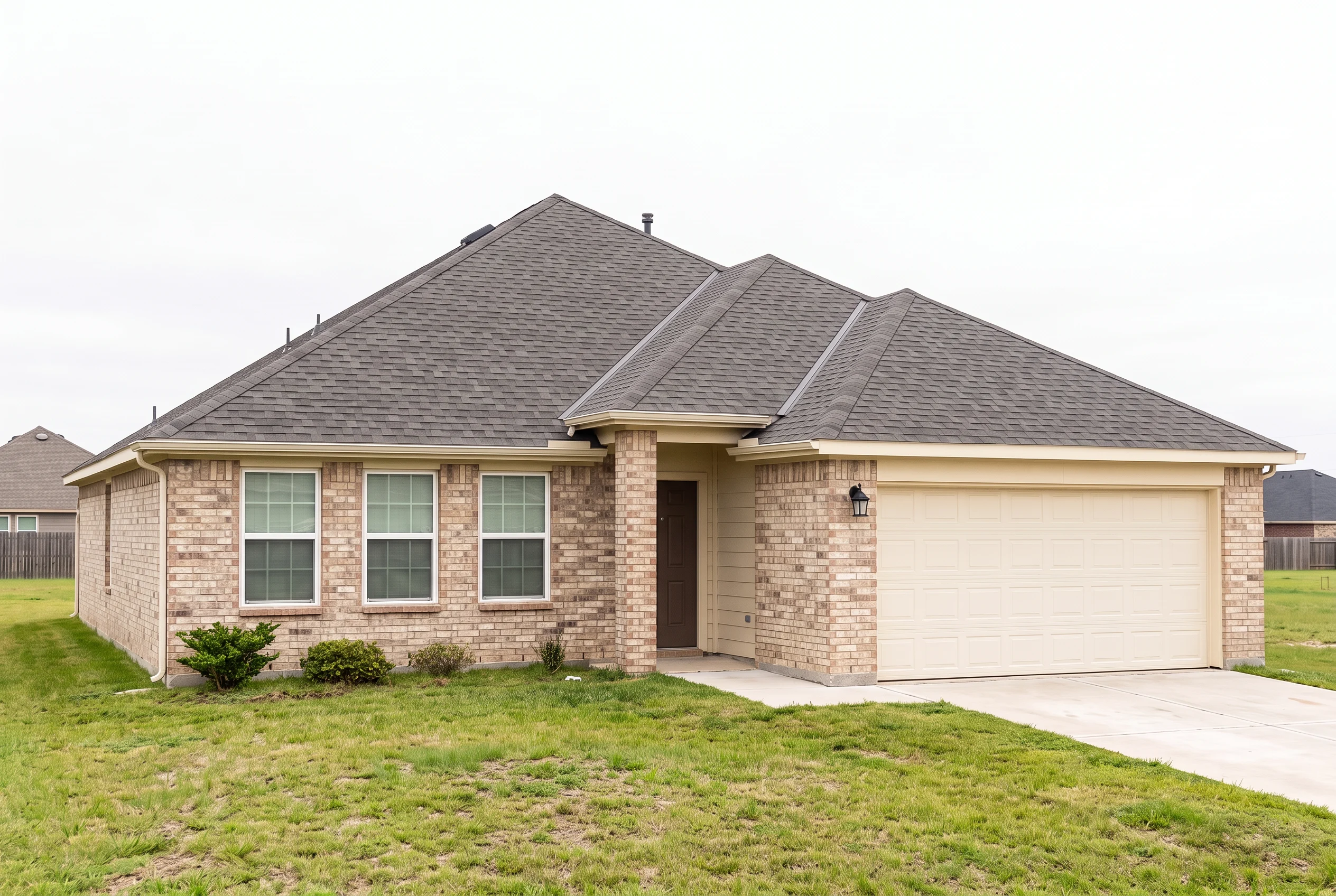
Higgsfield AI-generated illustrations of fictional homes, not SureClaim projects or exact manufacturer colors. These previews compare general color relationships; confirm the actual shingle with physical samples.
What stays: tan brick, ivory trim and warm neutral gutters.
Charcoal: Makes the difference between the light walls and dark roof more noticeable. Ask yourself whether you like that emphasis when viewing the whole house, including the garage and front entry.
Warm brown: Continues the warmer palette. Check whether the brown complements the actual brick, rather than assuming any brown will work with any beige.
Gray-brown blend: Can make the transition between roof and walls feel gentler. Compare its undertones with the ivory trim; some blends that look balanced alone may read cooler beside cream.
Your next step: Step back to the distance from which you normally see the house. Decide whether you prefer a clearly outlined roof or a quieter transition. That preference matters more than a universal instruction to go darker or lighter.
Example 3: Roof colors for gray siding and stone
Same house, three roof-color families. Open an image for a larger view.
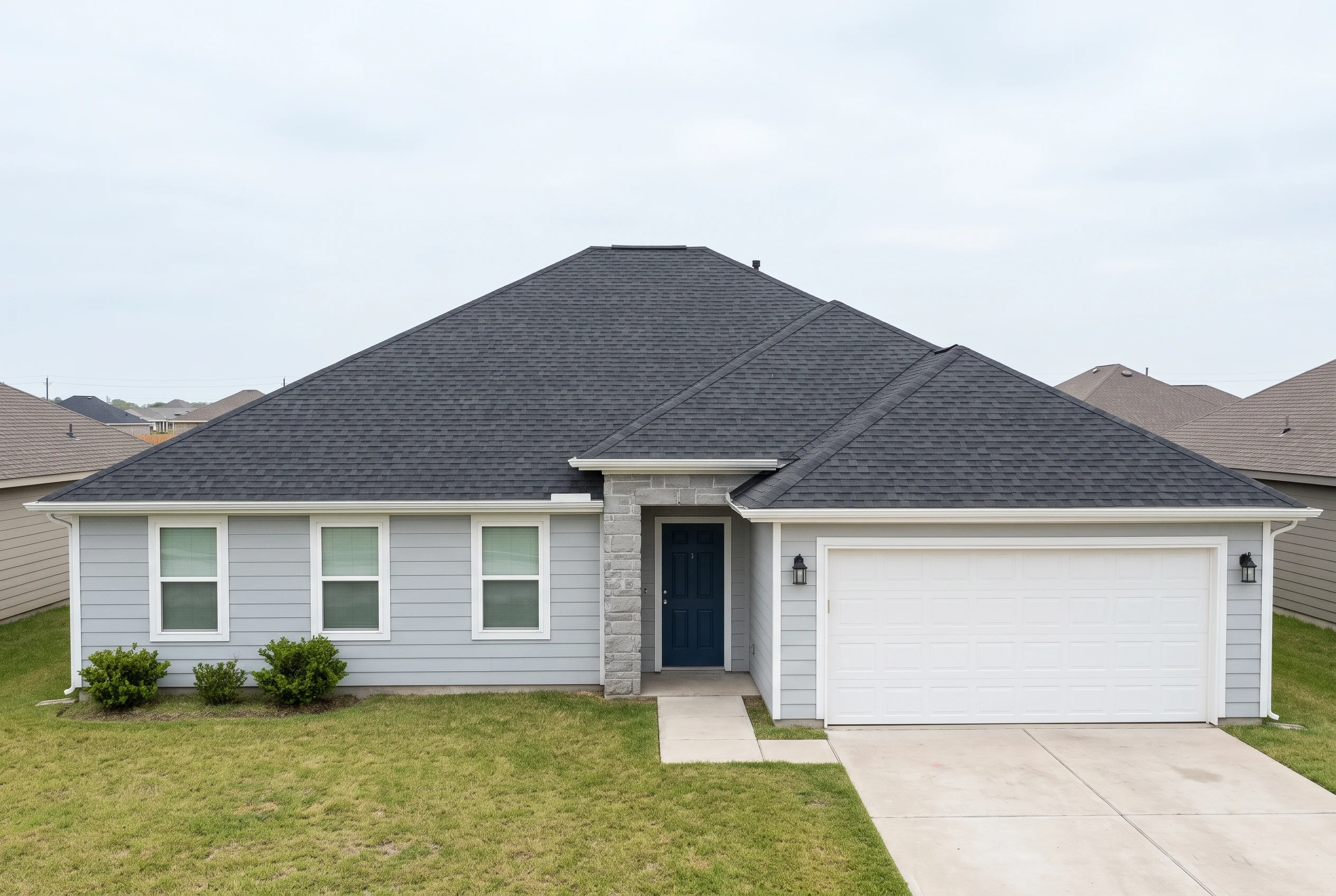
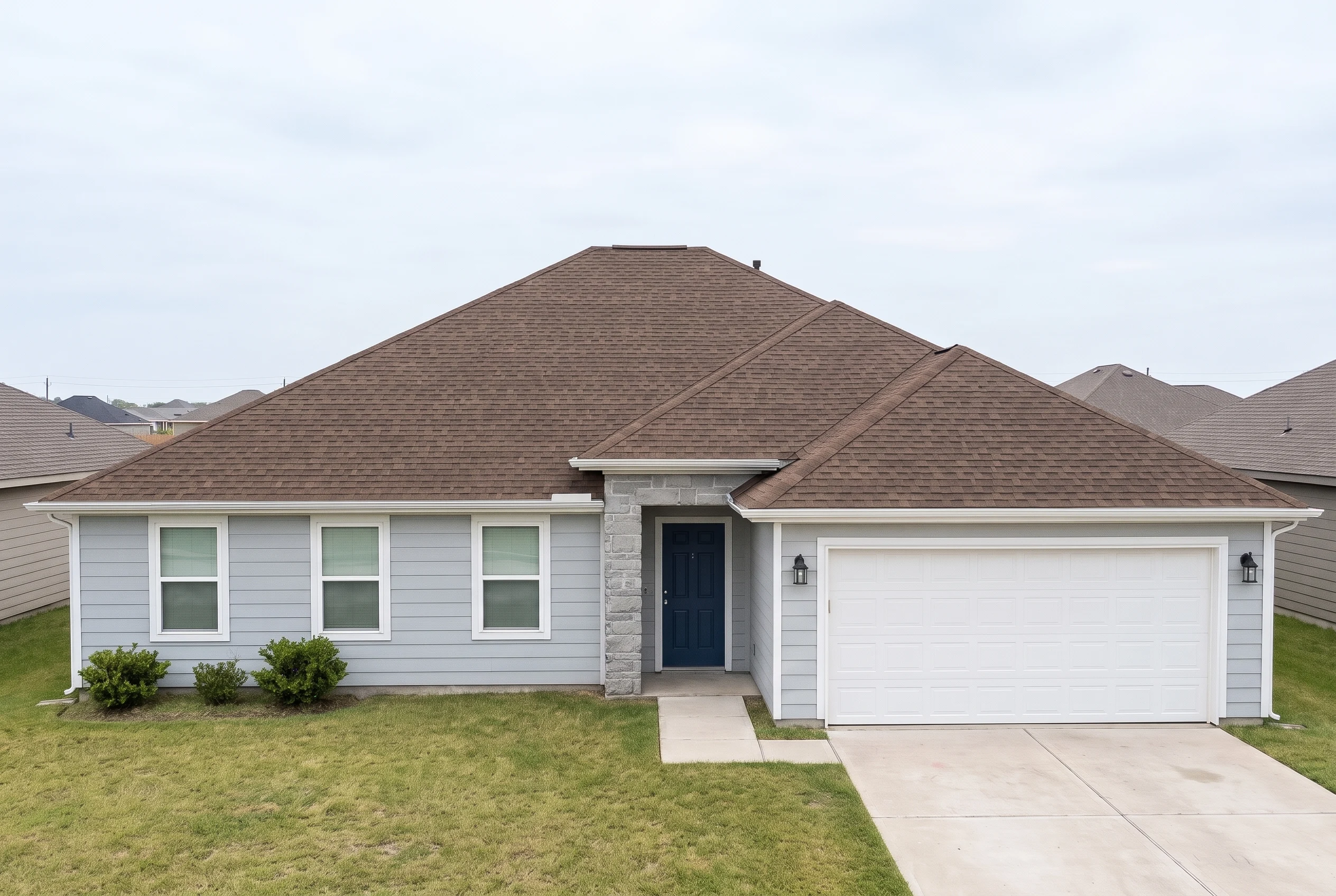
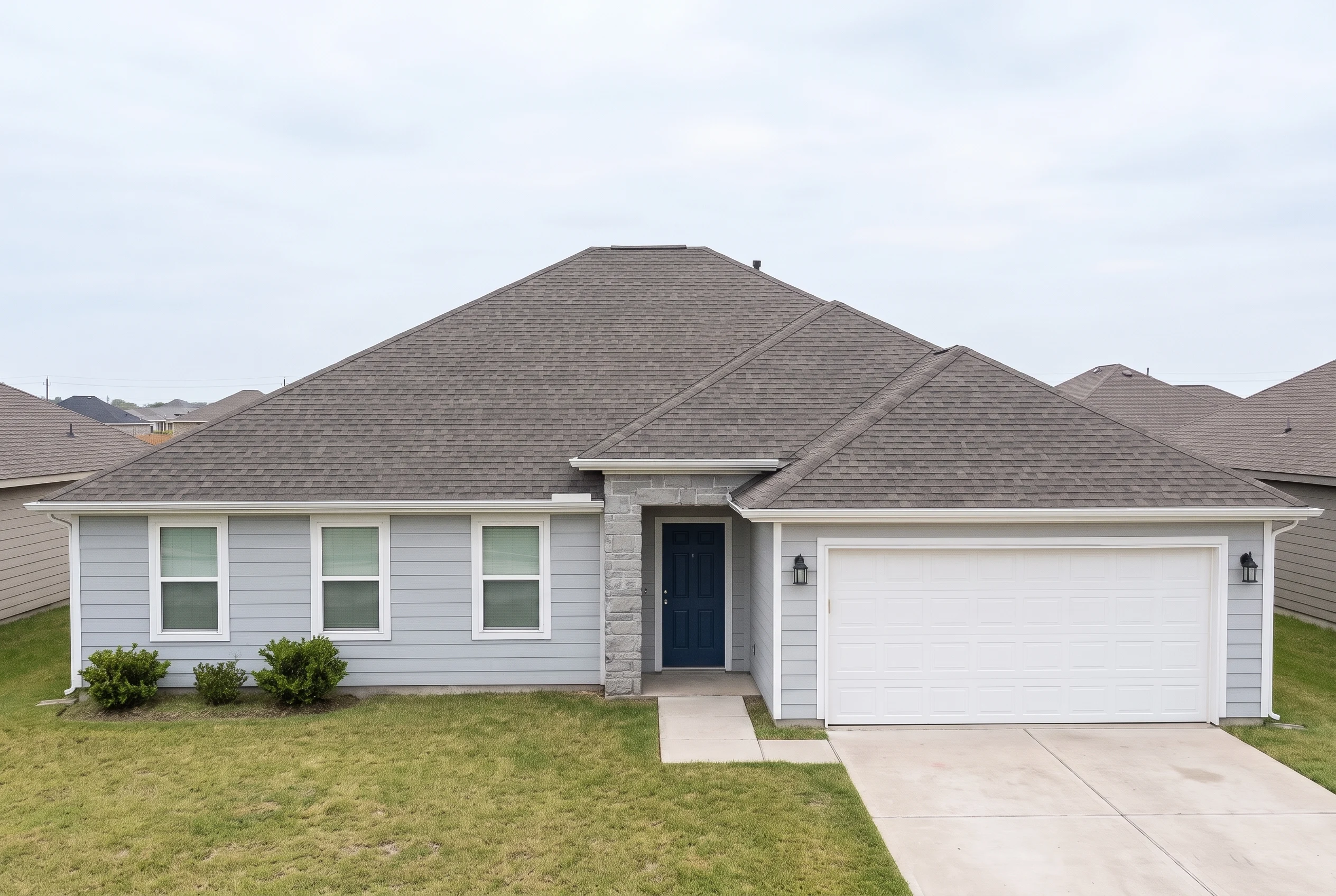
Higgsfield AI-generated illustrations of fictional homes, not SureClaim projects or exact manufacturer colors. These previews compare general color relationships; confirm the actual shingle with physical samples.
What stays: light-gray siding, cool-gray stone and white trim.
Charcoal: Adds a crisp darker contrast while staying within a broadly gray palette. Check the roof and stone together so differences in their color casts do not surprise you.
Warm brown: Introduces a warmer element. That can be an intentional design choice, particularly when other exterior details repeat the warmth. Compare it carefully against the stone instead of dismissing or choosing it from the roof alone.
Gray-brown blend: Produces a softer alternative to charcoal. Look at whether the brown granules help connect the exterior or introduce an additional color you do not want.
Your next step: Include the full stone section in your photograph and sample comparison. An appealing roof-and-siding pairing may look different once the stone enters the picture.
Step 3: Check the shortlist in real light and at roof scale
A swatch is small and close to your eyes. An installed roof is a much larger surface seen from a distance and at an angle. Give yourself more than one view before approving it.
Ask for several full-size shingles in each finalist. Compare them outdoors beside the finishes that will remain. Look again under different daylight conditions, and photograph the shortlist for reference without treating the phone image as a color measurement.
Where practical, ask to see a completed roof in the same product line and color. Owens Corning recommends looking at a roof with a similar pitch, while IKO recommends full-size samples and actual installations before final selection. You can assess the overall appearance from a normal public viewing position; there is no need to access a roof. Owens Corning, undated, IKO, 2023
If you use an AI or manufacturer preview, inspect the rest of the house too. A changed garage door, brighter walls or different lighting can make one option seem better for reasons unrelated to the shingles. Manufacturer tools include CertainTeed ColorView, undated and GAF's visualizer, undated.
Step 4: Keep appearance and roof performance as separate decisions
For Houston-area homeowners concerned about summer heat, a picture cannot tell you a product's solar performance. Ask about the exact product's solar reflectance, how much solar energy it reflects, and thermal emittance, how readily its surface releases heat. Reflective pigments can change how a roof handles solar energy without making it appear proportionally lighter. Do not assume a gray-looking illustration establishes energy savings. Pacific Northwest National Laboratory, undated
Likewise, color does not establish impact resistance. Texas insurance-credit requirements depend on the tested material and insurer documentation, not whether a roof looks dark or light. See our guide to whether Class 4 shingles are worth it in Texas and confirm requirements with your insurer. Texas Department of Insurance, 2023
Step 5: Put the final selection in writing
Before ordering, save a simple selection record:
- Manufacturer, exact product line and exact color name.
- A photograph of the actual sample and its identifying label.
- Any applicable HOA or architectural-committee approval.
- Confirmation of availability and an agreed process for proposed substitutions.
- Who will check delivered package labels against the approved order before installation.
If your property has an HOA, obtain its current requirements early. Do not assume a neighbor's roof or a generic color label establishes approval for your project.
If the delivery or proposed substitution differs from what you selected, raise it with the contractor before installation and reconcile the order, labels and samples. Keep the final selection with your signed proposal and warranty information.
Take the checklist to any roofer
You are ready to decide when you can explain why you prefer the color against your house, identify the exact product, and show the samples and approvals supporting that choice.
For the next decision, use our guides to reading and comparing roofing estimates and comparing roofing companies. They help you check what is being installed and who is responsible for the work.
If you are considering shingle roofing with SureClaim, ask which exact products and physical samples are available. Use the same checks whichever contractor you choose.
Sources
- GAF: Virtual Home Remodeler, undated.
- Owens Corning: Exterior Design Palettes, undated.
- Owens Corning: Roof Gawking, undated.
- IKO: Selecting a Shingle, July 4, 2023.
- CertainTeed: Design Tools, undated.
- Pacific Northwest National Laboratory: Cool Roofs and Walls, undated.
- Texas Department of Insurance: Impact-Resistant Roofing Credits, February 24, 2023.
Sure Claim Roofing LLC
Baytown, Texas
Roofing information for homeowners in Baytown and surrounding communities. Contact our team for an assessment of your property.
Need a Free Roof Inspection?
Book Your Free InspectionSee What Your Roof Should Cost in About a Minute
Type your address, and we measure your roof from satellite imagery and show you a real price range. Know your number before you talk to your insurance company.
Free. No obligation. Your price appears instantly online.
See your roof price in 60 seconds
Type your address. We measure your roof from satellite imagery and show you a real price range. Free, and no salesman visit required.
Prefer to talk to a person? Book a free inspection