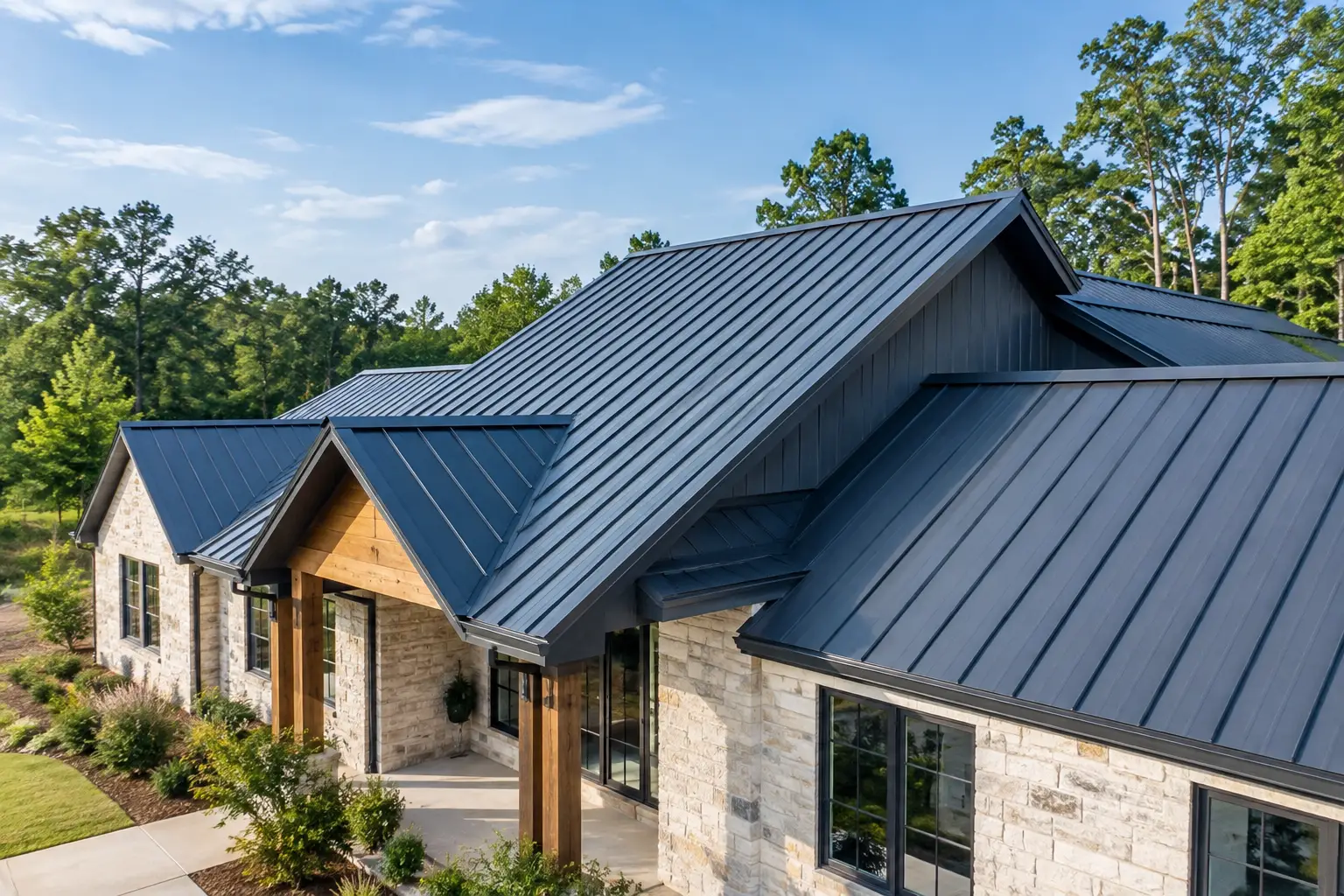
A metal roofing decision is rarely just about choosing a color or getting the longest warranty. In Baytown and across East Texas, a roof must manage hard sun, high humidity, wind-driven rain, sudden storms, and years of expansion and contraction. The panel matters, but so do the flashing details, fasteners, ventilation, drainage, and condition of the structure beneath it.
For some properties, metal is an excellent long-term replacement choice. For others, a targeted repair or a different roof system makes better financial sense. The right answer starts with an on-roof evaluation and clear documentation of what is actually there.
Is Metal Roofing Right for Your Property?
Metal roofing is commonly selected for its service life, clean appearance, and ability to shed water efficiently when installed correctly. It can work well on homes, shops, warehouses, agricultural buildings, retail properties, and other commercial structures. It is also available in profiles that range from traditional standing seam panels to metal shingles and exposed-fastener panels.
Still, metal is not a one-size-fits-all solution. A roof with complex valleys, numerous penetrations, low-slope transitions, or equipment curbs needs careful design. The lowest material price may not reflect the labor required to flash those details properly. On an occupied commercial building, access, safety planning, drainage, and protecting daily operations can matter as much as the panel selection.
Before choosing a system, establish the roof’s age, current leak locations, deck condition, roof slope, ventilation approach, and whether storm damage or an insurance claim is involved. A proper inspection should include photos of the field panels or existing shingles, flashing, pipe penetrations, valleys, ridges, gutters, and any visible decking concerns.
Common Metal Roofing Systems
Standing Seam Metal Roofs
Standing seam panels use raised seams and concealed clips or fasteners. Because the fasteners are not exposed in the main panel field, this system is often chosen for residential replacements and higher-end commercial applications. It creates a clean, continuous appearance and allows for panel movement as temperatures change.
Standing seam costs more than many exposed-fastener systems, and details still determine performance. Ridge caps, valleys, wall transitions, chimney flashing, pipe boots, and panel terminations must be formed and installed correctly. A well-made panel cannot compensate for weak workmanship at those locations.
Exposed-Fastener Metal Panels
Exposed-fastener panels are a practical option for many barns, workshops, storage buildings, and some commercial structures. The screws are visible and use washers to seal the fastening point. This can make the system more economical upfront, but the fasteners require attention over time.
Heat and weather cycles can affect washers and screw tightness. A maintenance plan should include periodic checks for backed-out screws, deteriorated washers, damaged sealant, and loose ridge or trim pieces. A minor fastener issue is easier and less expensive to address before it becomes an interior leak.
Commercial Metal Roof Systems
Commercial metal roofing may include structural standing seam systems, retrofits over existing roofs, insulated metal panels, or low-slope metal assemblies designed around a building’s drainage and use. Warehouses, industrial sites, retail centers, and shops often have larger roof areas with more complicated details than a typical home.
A commercial assessment should account for roof access, rooftop units, curbs, skylights, gutters, scuppers, interior operations, and safety requirements. If water is ponding or the building has recurring leaks, the first question is not simply which panel to install. The first question is why water is collecting or entering the assembly.
What Drives Metal Roofing Cost?
A quote for metal roofing should make clear what is included, not just provide a price per square. Panel type, metal gauge, coating, roof size, slope, tear-off requirements, deck repairs, insulation, underlayment, flashing, and trim all influence the total cost.
Complex roofs usually cost more because they require more cuts, transitions, and labor-intensive flashing. A simple gable roof with open access is different from a roof with dormers, skylights, multiple valleys, masonry walls, or several levels. On commercial work, crane access, staging, after-hours scheduling, and protecting tenant areas can also affect the proposal.
When comparing bids, ask whether the contractor has included removal of the existing roof, replacement of damaged decking if found, underlayment type, flashing materials, ventilation work, disposal, and cleanup. Two quotes can look similar until you compare the scope line by line.
The Details That Protect a Metal Roof
Metal roof leaks most often trace back to details, not a failure across the entire panel field. Penetrations and transitions deserve particular attention because they interrupt the roof’s water-shedding path.
A responsible installation plan should address these areas:
| Area to Review | Why It Matters | |---|---| | Pipe penetrations and vent stacks | Boots and sealants must remain flexible and properly integrated with the panel layout. | | Chimneys, walls, and sidewalls | Step flashing, counterflashing, and termination details direct water away from vulnerable joints. | | Valleys and roof transitions | Fast-moving water concentrates in these areas during heavy rain. | | Ridges and panel ends | Closure strips, underlayment, and trim help prevent wind-driven rain and pest entry. | | Gutters and drainage | Water needs a controlled path off the roof without overshooting or backing up. |
Underlayment is another important part of the system. It serves as secondary protection beneath the panels, particularly around seams and transitions. The appropriate material depends on the roof design and local conditions. Ventilation also needs to be considered as part of the full assembly, especially when replacing an existing residential roof.
Repair or Replacement: Start With the Evidence
Not every metal roof issue calls for full replacement. A localized leak may be caused by a failed pipe boot, loose fasteners, damaged trim, open flashing, or sealant that has reached the end of its useful life. If the panels and underlying structure remain sound, a focused repair may be the sensible path.
Replacement becomes more likely when leaks are recurring across several areas, panels are significantly damaged, fasteners are failing throughout the roof, corrosion is widespread, or the roof deck has sustained water damage. Storm damage also needs careful documentation. Hail and wind damage are not always obvious from the ground, and not every mark on metal is functional damage. The goal is an honest assessment, not manufactured damage.
| What You Are Seeing | Information to Establish First | |---|---| | A new active leak | Exact interior location, roof detail above it, and whether water is entering during rain or after it stops. | | A recurring leak after repairs | Previous repair locations, drainage path, flashing condition, and whether the original cause was identified. | | Rust, loose screws, or worn sealant | Whether deterioration is isolated or present across the roof system. | | Storm concerns | Photo documentation of panels, seams, trim, penetrations, and related roof components. | | An aging roof with no current leak | Panel condition, remaining serviceability, deck condition, and the cost difference between maintenance and replacement. |
For insurance-related work, photos and a written scope help property owners understand what is being claimed and what work is proposed. If an adjuster inspection is needed, having the roof conditions documented before the meeting can reduce confusion.
Questions to Ask Before Authorizing Work
Ask who will inspect the roof, who will be your point of contact during the project, and how unexpected deck damage or changed conditions will be handled. Request a written scope that identifies the panel system, underlayment, flashing, trim, fasteners, ventilation work, cleanup, and warranty information.
It is also reasonable to ask how the crew will protect landscaping, driveways, equipment, and occupied areas. For commercial properties, ask how access will be managed and whether work can be staged to limit disruption. Clear answers before work begins are usually a better sign than vague assurances after a problem develops.
Sure Claim Roofing approaches metal roof decisions with an on-roof inspection, photo-supported findings, and options you can review before deciding. Whether the next step is a repair, maintenance plan, storm documentation, or full replacement, the condition of the actual roof should lead the conversation.
A metal roof can be a durable investment, but it deserves more than a drive-by estimate. Get the details in writing, look at the evidence, and choose the scope that protects your property rather than simply producing the lowest number.